
Investing used to mean poring over charts, watching tickers all day, and trying to outsmart the market. Lately, though, a quieter approach has caught fire with younger Americans — call it hands-off or “lazy” investing. Instead of jumping between trades hoping to beat the averages, many now favor slow-building strategies that need little upkeep: broad-market funds, automated platforms, and set-and-forget contributions. The mindset has shifted too — steady, patient growth is in, frantic trading is out. More and more young investors see the value in stepping back and letting time do the heavy lifting.
Simple Strategies

At its core, lazy investing is beautifully simple: buy broad index funds and hold them for a long time. Young investors are skipping complex strategies and stock-picking in favor of clarity — one or two funds that capture the whole market. There’s no need to predict winners when you can own a slice of everything. Simplicity isn’t a compromise here; it’s the entire point, and it works precisely because there’s less to get wrong.
Power of Automation

Modern investment apps handle the discipline automatically: recurring deposits, diversified allocations, and periodic rebalancing all happen without lifting a finger. Money flows into investments on schedule while the saver focuses on living their life. This automation removes the biggest enemy of good investing — human inconsistency. Savings build quietly in the background, month after month, powered more by systems than by willpower.
Lower Stress

Constantly checking prices is a recipe for anxiety — every dip feels like a crisis and every spike like a missed opportunity. Lazy investors step back from that cycle entirely. By checking rarely and trading almost never, they replace panic with patience. The tension fades, the noise recedes, and investing becomes what it should be: a background habit, not a daily emotional event.
Index Fund Popularity

Funds that track entire markets are drawing young investors in record numbers. The appeal is straightforward: instant diversification across hundreds of companies, no need to research individual stocks, and returns that mirror the market’s overall growth. One purchase replaces dozens of decisions. For a generation that values efficiency, the index fund is the ultimate shortcut — broad exposure without the homework.
Influence of Experts

The experts have been saying it for decades: for most people, simple beats clever. Legendary investors have long advised ordinary savers to buy low-cost index funds and leave them alone — advice that once sounded boring and now sounds wise. That wisdom is spreading wider than ever through books, podcasts, and social media. Young adults are listening, choosing quiet compounding over the frantic trading that rarely pays.
Avoiding Trading Mistakes

Frequent trading invites emotional mistakes: buying high on excitement, selling low on fear, chasing whatever’s hot. Each impulsive move chips away at returns. Lazy investing sidesteps this trap by design — when the plan is to hold for years, there’s simply less opportunity to sabotage yourself. Staying put isn’t passivity; it’s protection against your own worst impulses.
Long-Term Mindset

Starting early gives young investors their greatest advantage: time. Decades of compounding turn modest, regular contributions into substantial wealth — but only for those who start and stay the course. The long-term mindset reframes every market dip as a buying opportunity and every year as progress. Patience isn’t just a virtue here; it’s the entire strategy.
Low Fees Matter
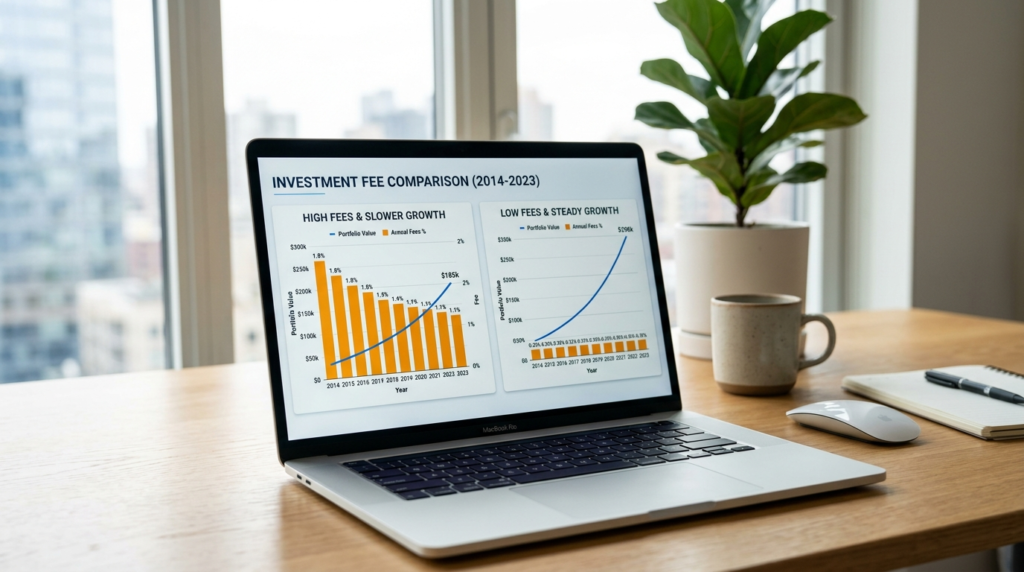
Actively managed funds charge handsomely for the promise of beating the market — a promise most fail to keep. Index funds, by contrast, cost a fraction as much because there’s no expensive stock-picking team to pay. Over decades, that fee gap compounds dramatically in the investor’s favor. Lazy investors understand a simple truth: every dollar not paid in fees is a dollar that keeps growing for them instead.
Technology Support

Technology tore down the barriers that once kept beginners out. Anyone can now open an account in minutes, invest tiny amounts through fractional shares, and let algorithms handle rebalancing and tax optimization. The tools explain themselves, the minimums are negligible, and the entire experience is designed for people who’ve never invested before. Lazy investing isn’t just a philosophy anymore — it’s the default setting of modern finance apps.
A Cultural Shift

The rise of lazy investing reflects deeper changes in what younger Americans value: sustainability over speculation, calm over chaos, autonomy over hype. Instead of hunting hot tips or gambling on trends, they’re choosing slow, hands-off strategies built for the long run. It looks lazy from the outside. From the inside, it’s one of the smartest financial decisions a young person can make.
