
The “Quantum Salt Mine” is a high-stakes strategy: global banks are physically moving their most sensitive servers deep underground. As quantum computers edge closer to breaking today’s encryption, the finance industry is turning to ancient geography — salt mines and mountain bunkers — to create “unhackable” vaults for the world’s financial assets.
Cosmic Ray Protection
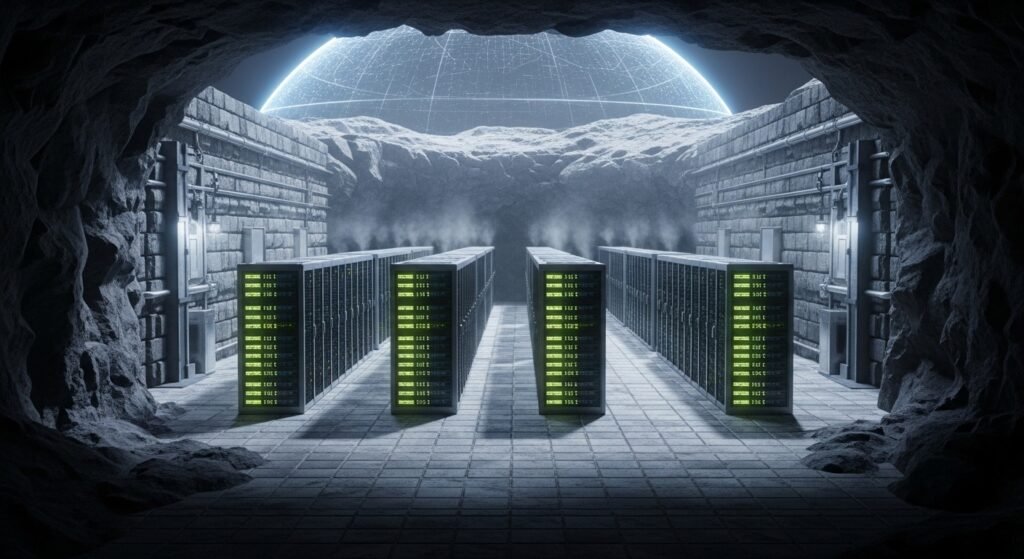
High-energy particles from space can cause “bit-flips” — tiny faults in hardware running critical financial operations. Hundreds of feet of rock overhead act as natural shielding that keeps data physically stable.
The Swiss Fort Knox Example

Swiss Alps military bunkers have become private “data citadels” for commercial use. Buried in solid granite, they shield systems from electromagnetic pulses and prying eyes alike.
Air-Gapped Security Zones

Underground vaults enable true “air-gap” security — backup servers with complete internet isolation. Data can only be accessed by physically entering the mine, making remote hacking impossible.
The Kansas Salt Vaults
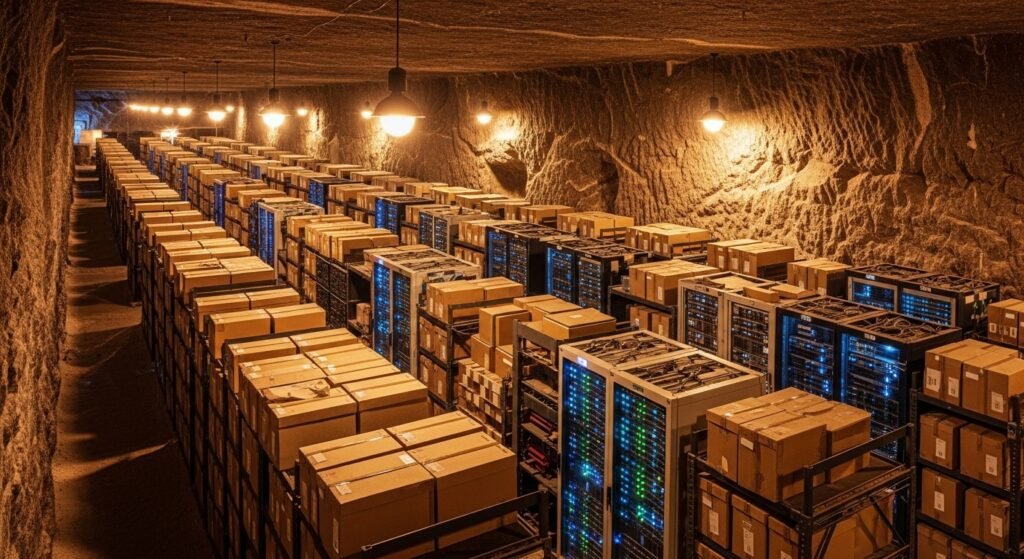
The Hutchinson, Kansas salt mine stores millions of physical and digital records. Salt naturally regulates humidity — ideal for preserving hard drives, physical “keys,” and ledgers for Bitcoin and gold alike.
Quantum Key Distribution (QKD)
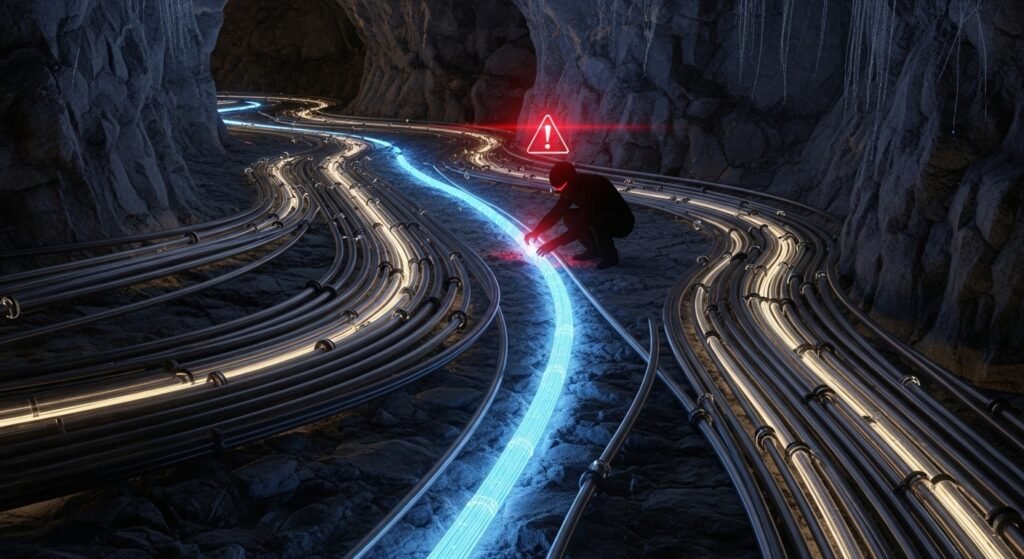
Banks transmit “quantum keys” through underground fiber-optic lines encased in deep rock — physically untappable. Any interception attempt instantly alerts the bank by disturbing the quantum signal.
Resistance to Physical Theft
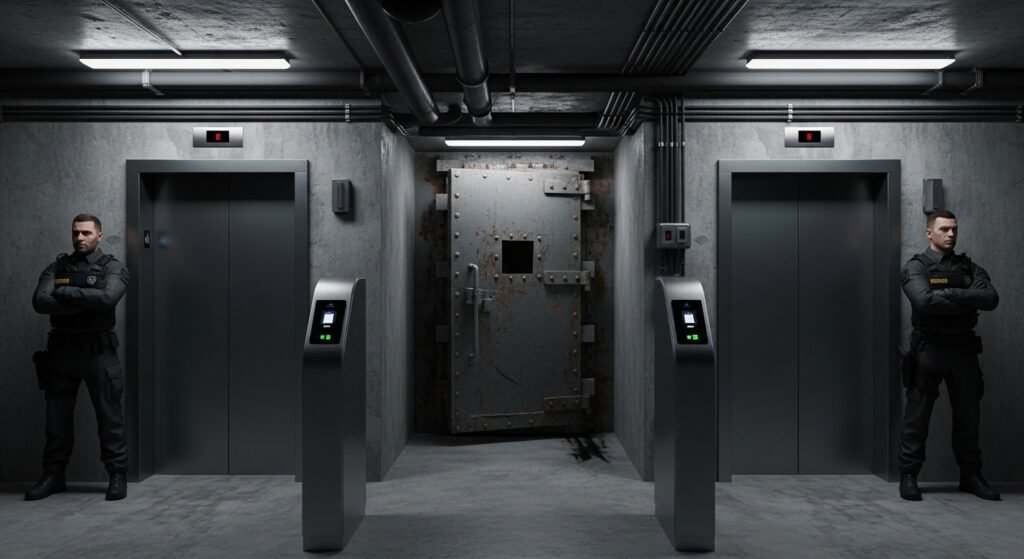
You can’t just “break in” to an underground salt mine. With only two guarded elevator shafts as entry points, these vaults outclass any office building against physical theft.
Nuclear and Disaster Resilience

Deep-earth mines survive “doomsday” scenarios — earthquakes, surface explosions — that would destroy surface data centers. The ledger of financial ownership keeps running through global emergencies.
Geological Longevity
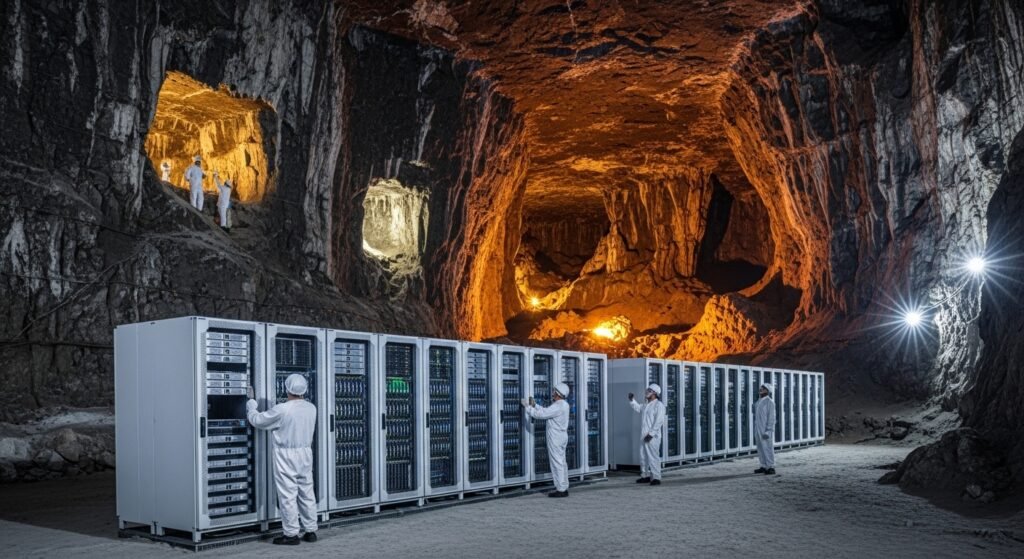
Salt formations stay geologically stable for millions of years. Banks see underground mines as the only “permanent” home for root data — outlasting any surface construction by eons.
The Iron Mountain Model
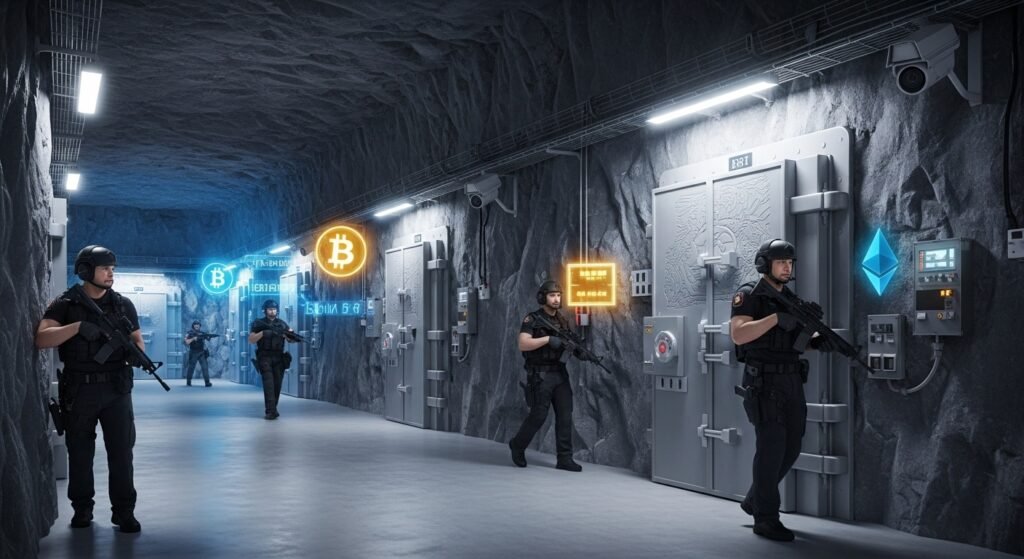
Iron Mountain guards the world’s biggest banks’ data from an underground limestone mine — armed guards, fireproof vaults, and a mountain overhead proving that rock beats concrete for digital security.
Preparing for “Q-Day”
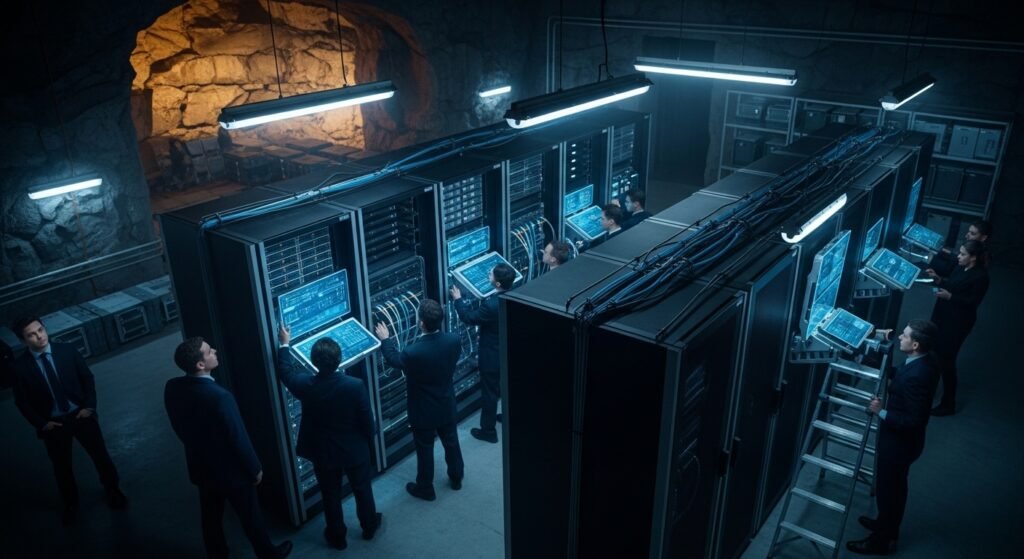
“Q-Day” — the theoretical moment quantum computers crack every current password — is coming. Banks are already installing “quantum-resistant” hardware underground, in total secrecy, before attackers catch up.
