
American higher education today no longer accepts perfect grades and test scores as proof for students who want admission into colleges. The digitization of application processes for top-tier schools has led to an unprecedented decline in acceptance rates which now stand at their lowest point in history. The admissions process at elite universities now requires institutions to build their entire applicant pool for specific exceptional candidates who will create the most valuable diverse educational advantages.
Harvard University
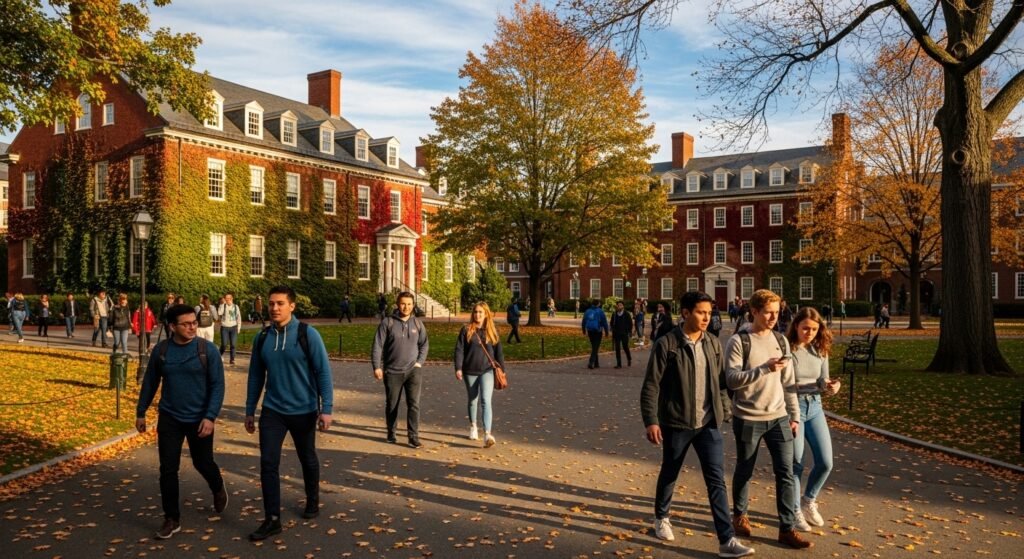
Harvard establishes itself as the gold standard for selectivity because it serves as the oldest educational institution in the nation. The university maintains an acceptance rate which usually stays around 3 percent thus making admission extremely difficult. The admissions committee looks for “intellectual vitality” which requires students to show deep dedication to their studies while achieving academic excellence.
Stanford University

Stanford University stands out as the Western United States’ most selective college due to its Silicon Valley location. The university attracts future entrepreneurs because they can easily access nearby technology companies which operate as business incubators. The university decided to stop sharing its actual acceptance rate information because it wanted to decrease the admission “frenzy” which resulted from students sharing their admission results.
California Institute of Technology (Caltech)

Caltech operates as a small academic institution which specializes in science and engineering educational programs and the Caltech University has an admission policy which allows only a few hundred students to enroll each academic year. The institution operates under a “test-blind” standard which requires them not to consider SAT or ACT test results; instead they evaluate students based on their exceptional mathematics and scientific accomplishments.
Massachusetts Institute of Technology (MIT)

MIT stands as the top destination for all outstanding mathematical scholars who exist throughout the globe. The university requires high test scores for admission yet they give priority to students who exhibit “nerdy” creative abilities through their activities like building fusion reactors or developing software for personal use. The university maintains a reputation for having extremely low acceptance rates which drop below 2 percent for international applicants.
Yale University
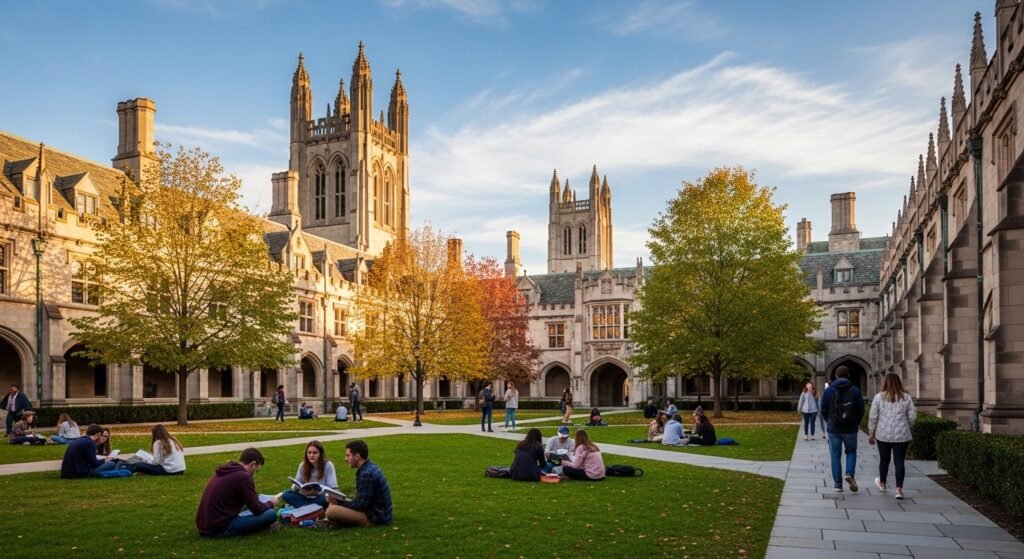
Yale University operates its “residential college” educational model while offering top-tier training programs for both law and acting. The university seeks students who demonstrate “Yale-ness” which means they must excel academically while actively participating in community service activities and this university receives tens of thousands of applications for very few spots, making the “waitlist” a common reality for even the best students.
Princeton University

Princeton University stands out from other Ivy League schools because it places total emphasis on teaching students who are studying for their undergraduate degrees. Every student must complete a “Senior Thesis” which requires them to write an extended research study. The university maintains an extremely low admission rate because it has fewer available spaces than Harvard and Yale which creates a limited capacity for new students.
Brown University

The “Open Curriculum” system at Brown University enables students to establish their academic paths without having to fulfill conventional “general education” obligations. The system gives students academic freedom which attracts independent-minded learners thus creating a surge in applications while decreasing acceptance rates.
University of Chicago
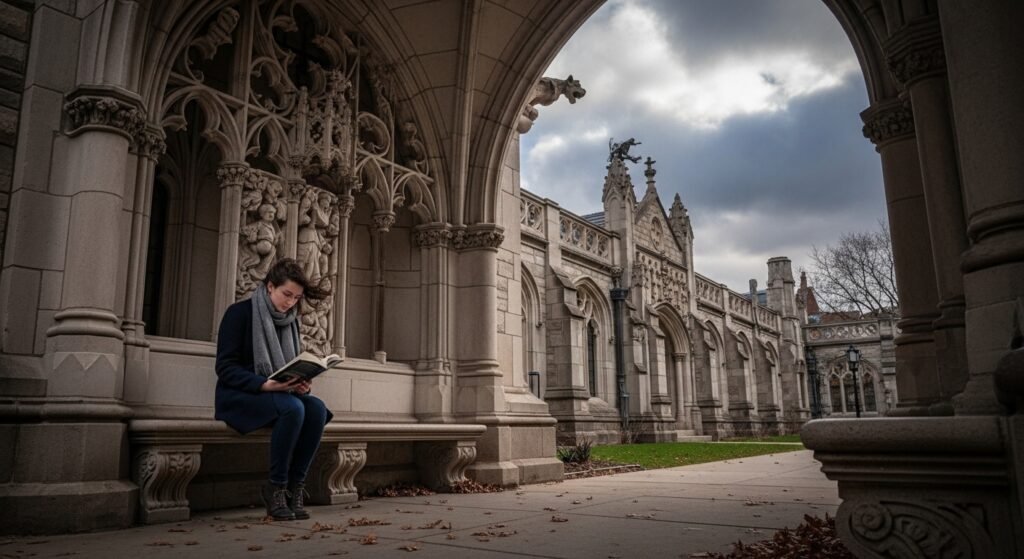
UChicago attracts students who enjoy thinking purely for intellectual purposes because they present difficult “uncommon” essay questions such as “Where’s Waldo, really?” This university has moved to the top of the rankings by prioritizing students who demonstrate a high level of intellectual curiosity and a “quirky” personality.
Dartmouth College

Dartmouth College stands as the smallest Ivy League school which sits in New Hampshire’s mountainous region. The university has a dedicated alumni community which supports its quarter-based “D-Plan” system that enables students to take their internships multiple times during the year. The university selects new students very carefully because they need to find people who will match with its small community which has a passion for outdoor activities.
University of Pennsylvania (UPenn)

UPenn functions as a pre-professional education center which serves students who want to pursue finance, nursing and engineering degrees after they have attended the Wharton School of Business. The university serves as a “pre-professional” educational institution which makes admission to its specialized programs the most challenging academic achievement in academic circles.
