
The “Quantum Salt Mine” is a high-stakes strategy where global banks are physically moving their most sensitive servers deep underground. The finance industry turns to ancient geography because quantum computers will eventually reach their power limit for breaking current encryption methods. The deployment of hardware in salt mines and mountain bunkers creates vaults which they describe as “unhackable” that safeguard global financial assets against emerging digital security threats.
Cosmic Ray Protection
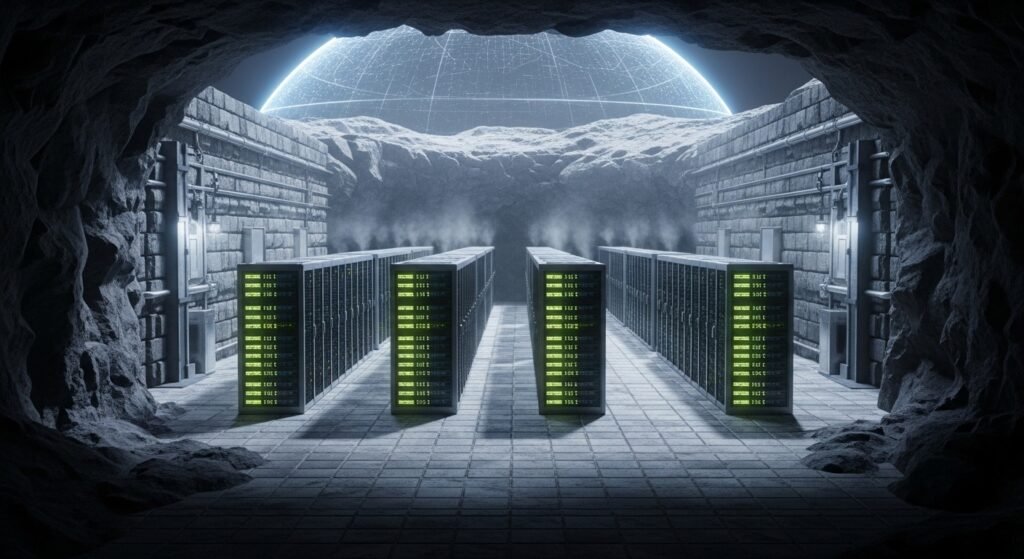
High-energy particles from space can cause “bit-flips” which create minute faults in essential hardware during extensive financial operations. The underground server system reaches a depth of hundreds of feet which enables rock material to work as natural protection that maintains data security through physical stability.
The Swiss Fort Knox Example

Swiss Alps military bunkers have transformed into private “data citadels” which now store data for commercial use. The facilities create an environment which protects them from electromagnetic pulses through their installation of secure systems in solid granite.
Air-Gapped Security Zones

The construction of “air-gap” protection systems enables banks to achieve complete internet isolation for their backup servers. The mine requires physical entry for data access which prevents any possibility of remote hacking.
The Kansas Salt Vaults
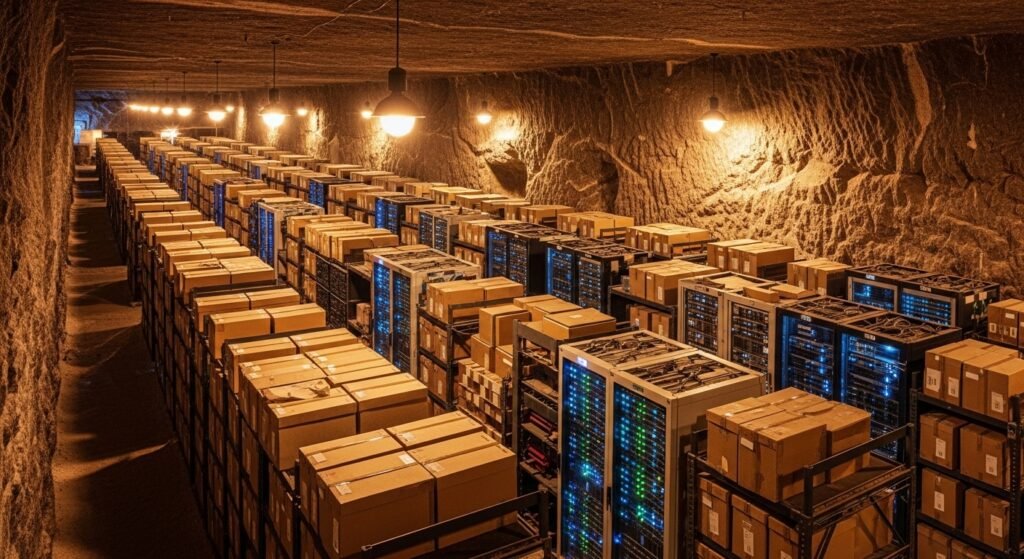
The salt mine located in Hutchinson Kansas operates as a storage facility for both physical records and digital records of millions of items. The salt maintains humidity at suitable levels which helps protect the physical “keys” and hard drives containing ancient Bitcoin and gold ledgers.
Quantum Key Distribution (QKD)
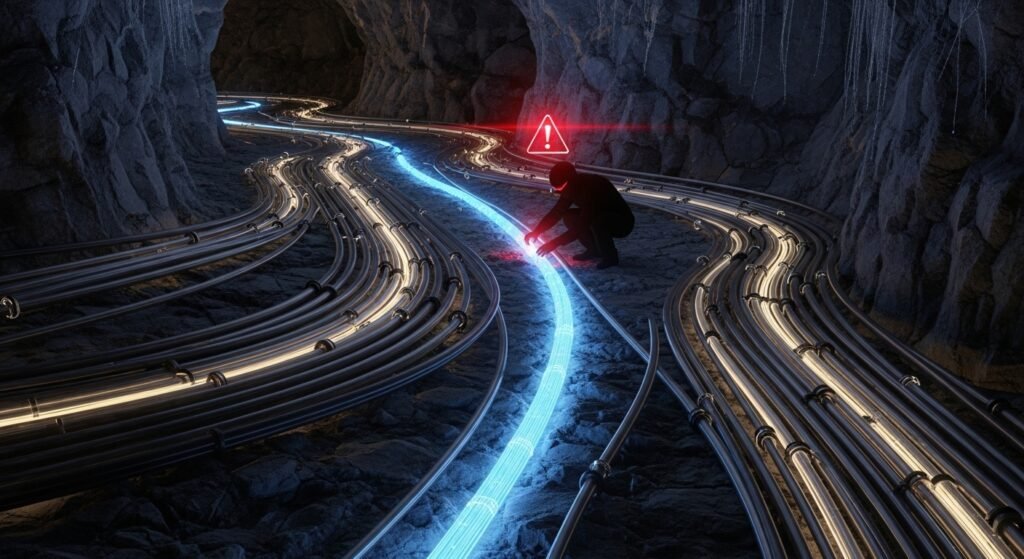
The bank transmits “quantum keys” through underground fiber-optic connections. The deep rock casing of these lines prevents anyone from physically tapping into them. The hacker will trigger an instant signal alert to the bank when they attempt to intercept the quantum signal.
Resistance to Physical Theft
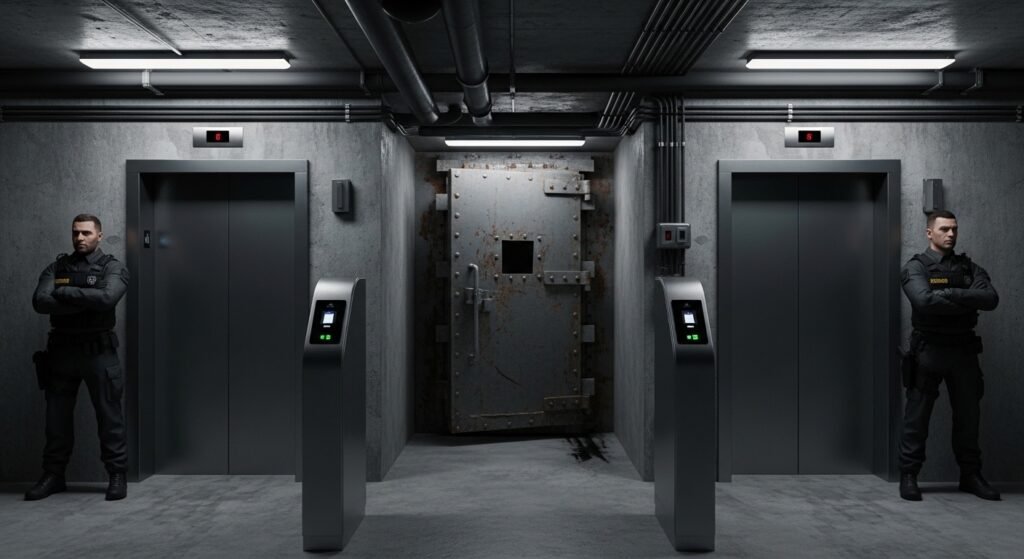
You cannot simply “break in” to an underground salt mine. The building uses two protected elevator shafts as its only entry points to achieve better security than any ordinary office space which protects against advanced theft attempts.
Nuclear and Disaster Resilience

Deep-earth mines maintain operational capability during “doomsday” situations because their design protects against earthquakes and surface explosions. The “ledger” of financial ownership maintains its complete operational capacity throughout global emergencies.
Geological Longevity
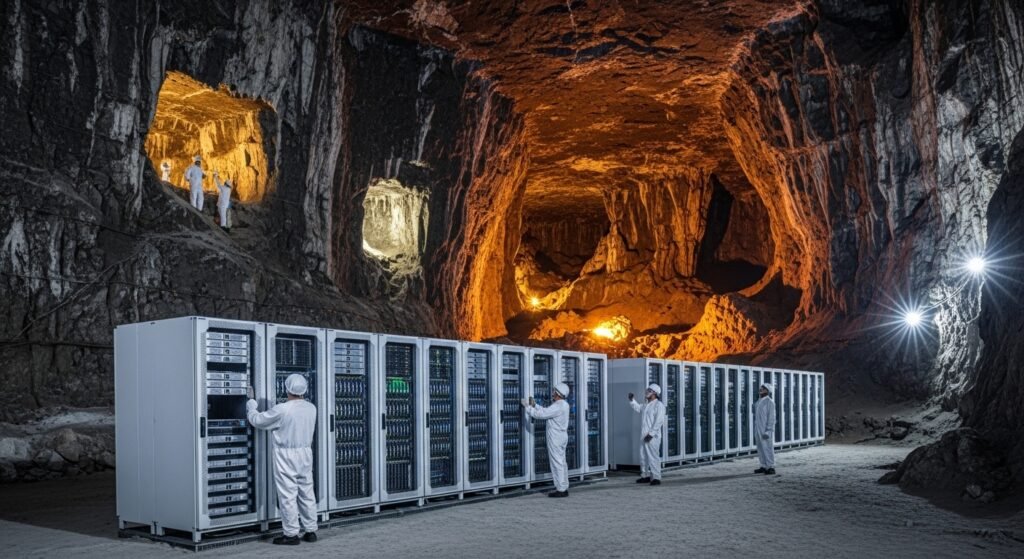
Salt formations maintain their geological stability throughout a period of multiple million years. The banking industry believes that permanent “root” data storage should exist in underground mines which will endure for longer periods than surface construction.
The Iron Mountain Model
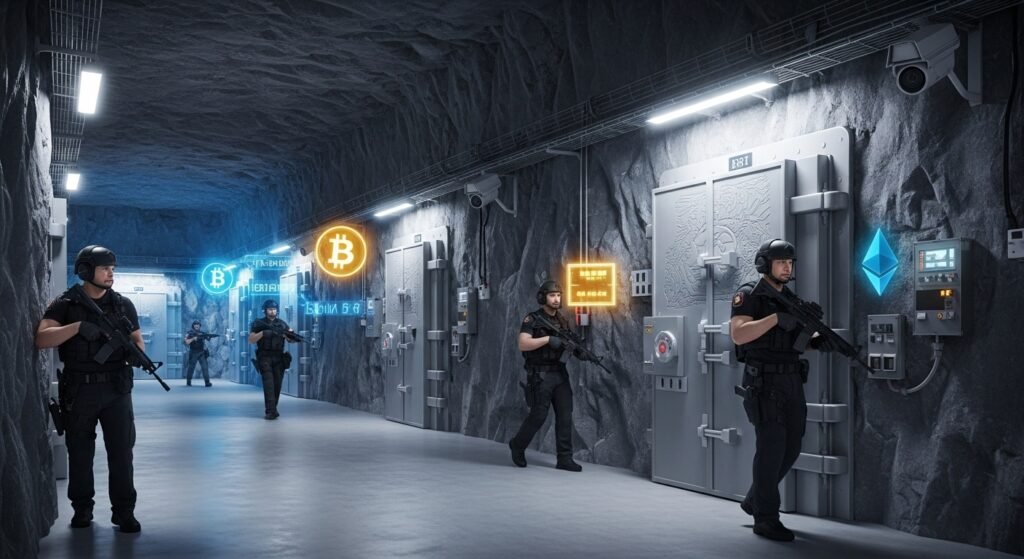
Iron Mountain protects the data of the biggest banks in the world by using an underground limestone mine as its storage facility. The real-life “data fortress” protects digital currency through its combination of armed guards and fireproof vaults which demonstrate that mountains serve as the most secure environments for digital currency storage.
Preparing for “Q-Day”
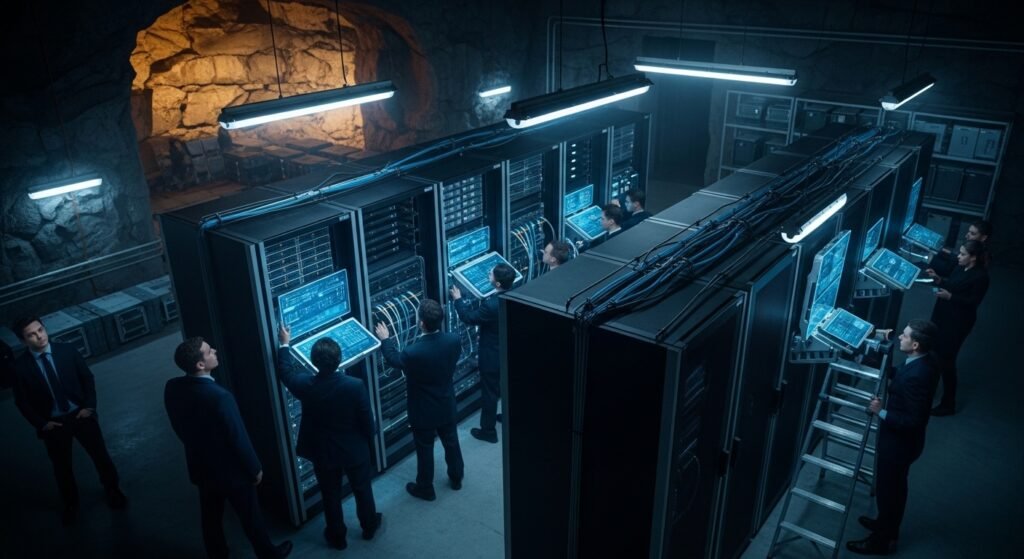
The theoretical date of “Q-Day” marks the point when quantum computers will have the ability to break every current password. The banks proceed to underground operations for hardware installation of new “quantum-resistant” devices which they conduct in absolute secrecy until hackers become operational.
