
Raising your GPA does not require overhauling your life — just smarter study design. Small adjustments to how you manage time, engage professors, and build habits can produce dramatic results fast. Here are 10 proven tricks that actually move the needle.
Calculate Your Current Standing

Know exactly where you stand before planning your next move. Most students guess at their grades; calculate precisely how many points you need to reach the next level, then target those points strategically.
Visit Office Hours Immediately

Meeting professors is the highest-ROI move in college. Showing up with thoughtful questions signals dedication — and that impression can tip a borderline grade from B+ to A-.
Master the Syllabus
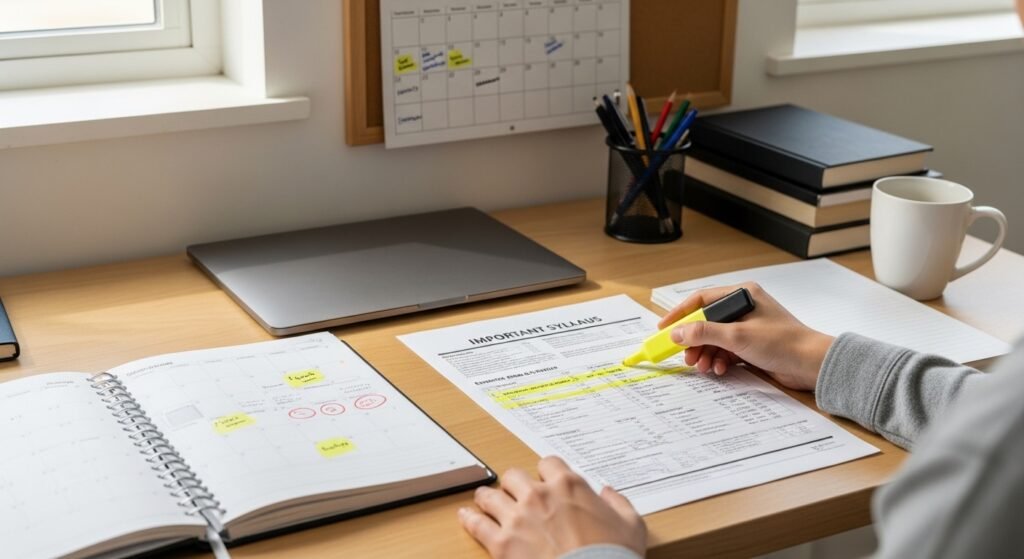
Do not file the syllabus away after week one. Revisit it mid-semester to find unclaimed points — participation grades, extra credit, attendance bonuses you did not know existed.
Audit Your Participation

Class participation often counts for 10-20% of your grade. Commit to asking one question or making one comment per session, and watch your score climb.
Use the Active Recall Method

Stop re-reading notes — it creates false confidence. Close the book and force yourself to recall the material. This retrieval practice builds stronger memory than any amount of passive review.
Prioritize High-Weight Assignments

Not all assignments are equal. Focus your energy on high-value projects and exams that dominate your final grade. Do not spend three hours perfecting a worksheet worth 1%.
Join or Form a Focused Study Group

Teaching a concept is the fastest way to master it. Study groups fill gaps in your notes and expose you to perspectives you would never find alone.
Clean Up Your Digital Workspace

Digital clutter creates mental clutter. Spend an evening organizing files and clearing your desk — starting homework becomes dramatically easier when chaos is gone.
Optimize Your Sleep Schedule

Students who sleep more often test better than those who cram. A rested brain consolidates memory and avoids the careless errors that tank multiple-choice scores.
Rewrite Your Notes by Hand

If you type notes, rewrite the key ones by hand. The slower pace of handwriting forces deeper processing — you learn while you write, not just while you review.
