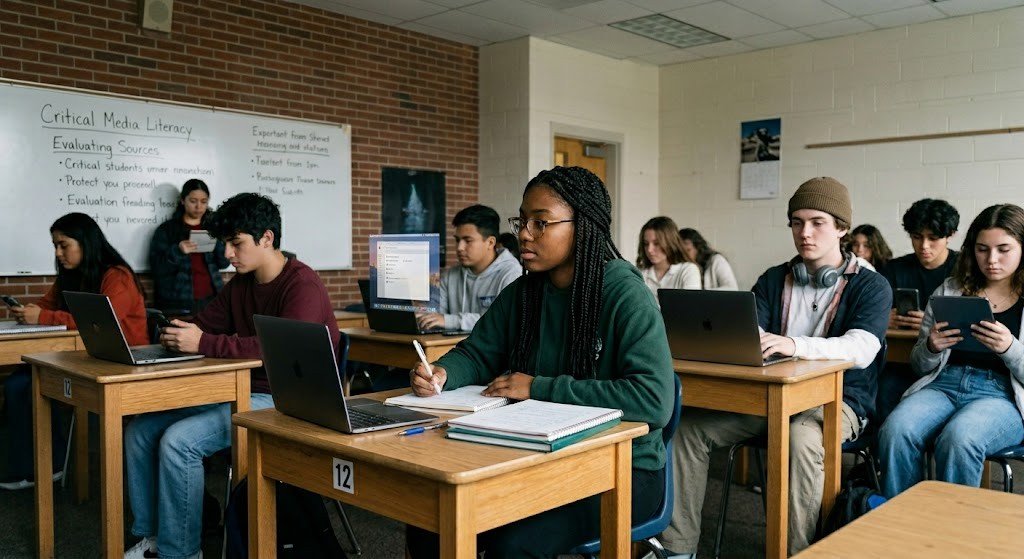
Education is being touted as the door to opportunity today, however, somewhere under the carpet lies a truth that is of increasing concern and that is that we are increasingly teaching students not how to think, but what to think. In a world of informational, opinion-based and digital clutter, critical thinking has sneakily not only grown more useful than memorized information, but it has also become more useful than actual knowledge. However, reasoning, rather than rote learning, is still being practiced in very many classrooms. This gap poses an awkward question: does contemporary education count upon trained independent thinkers, or is it merely cultivating docile students? The necessity of critical thinking is not a luxury anymore, it becomes a necessity to survive in a world which is changing too fast.
Beyond Memorization

Students continue to be rewarded on memorizing information as opposed to challenging it. This old fashioned method is producing people who have the ability to pass exams but cannot solve real life problems.
The System’s Comfort Zone
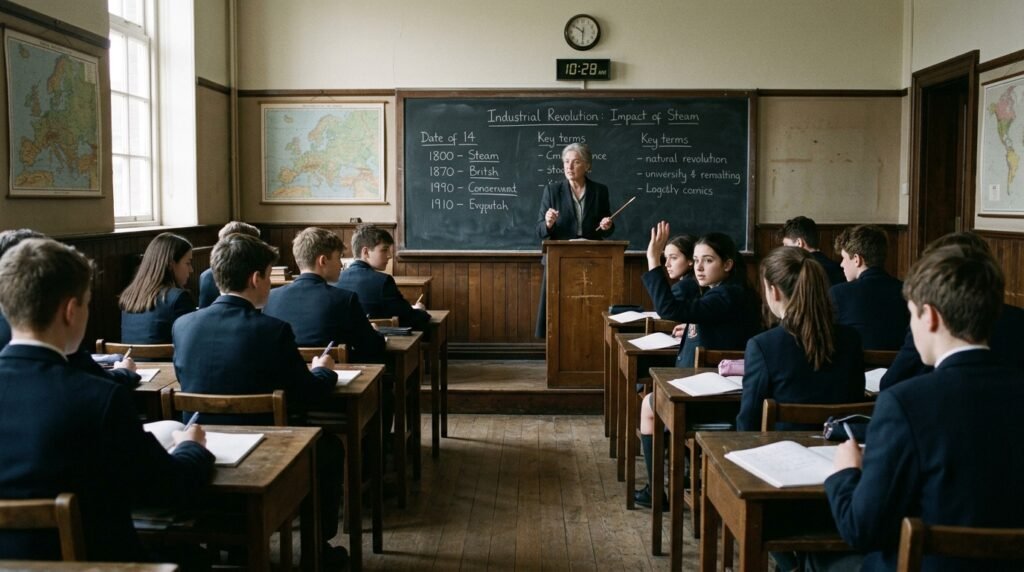
Critical thinking is opposed to education systems as it questions the authority. An enquiring learner may not sit well in the traditional model of teachers having control and thus institutions.
Falsehoods in Social Media

Fake news and manipulation cannot be omitted in the modern IT era which is contestable by nothing but critical thinking. In its absence, students get easy prey to misinformation.
Creativity Gets Suppressed
Lack of motivation to think critically means that the students lack creativity. Innovation does not exist by mindlessly following the norms.
Real Learning vs. Grades

The fascination with marks has forgotten the real appreciation. Critical thinking does not emphasize on achievement, as it is rather focused on acquiring knowledge.
Teachers as Facilitators

Contemporary education requires educators who lead discussions and do not dictate reactions. Nonetheless, not every teacher can be trained to do this transition.
Workplace Reality Check

Employers are now appreciating problem solving and decision making skills. Degrees are becoming useless in comparison with having the capability to think on your own.
Cultural Barriers

In most communities, it is regarded as disrespect to challenge the old customs. This is a state of mind that is in direct contrast with the process of critical thinking.
A Threat to Control?

This is perhaps the most provocative fact that critical thinkers are more difficult to manage. A system of education that actually encourages independent thought can end up provoking authority formations.
