
The internship requirement becomes essential for students to complete their studies because educational systems now consider it an essential part of their academic path. Students have begun to express their disapproval of these programs, which intend to give students actual work experience. Students have their main problem with unpaid internships because these programs make them work without pay which the companies then use to benefit from their efforts.
The Financial Barrier to Entry

The system of unpaid internships creates a situation where only those who can afford to pay for their work can access job opportunities. Wealthy students can undertake unpaid work because their families handle their living expenses. Low-income students face a significant challenge because their situation forces them to choose between necessary internship work and their essential paid employment which enables them to stay in school.
Paying for the Privilege to Work

When students need to complete an internship for their degree, they must pay tuition to obtain academic credit for their internship work. The university system creates a “double cost” situation because students must pay their school fees to obtain their educational rights and lose out on job earnings at the same time.
The “Replacement” Problem

Students argue that many companies use interns to do the work of entry-level employees. Interns at this organization must complete work responsibilities which include handling social media, dealing with customer inquiries, and performing administrative tasks instead of studying under their assigned mentors from whom they should learn their professional craft.
Blurred Educational Value

Internships that provide valuable mentorship to students represent a minority of internship programs. Students report that without strict oversight, mandatory internships can become “busy work” cycles where they learn very few transferable skills, making the “mandatory” nature of the role feel unjustified.
The “Experience” Trap

Employers see students as receiving payment through the experience they gain from their work. Students argue that they need money to pay for their work-related expenses which include gas and professional clothing and public transit costs. They believe that their work value gets reduced to nothing when their job value is exchanged for resume entry.
Impact on Diversity and Inclusion

Unpaid internships create a system which requires financial resources for entry thus preventing most people from obtaining unpaid job positions. Unpaid work requirements in high-prestige industries such as fashion and politics and media create barriers that prevent diverse talent from entering these fields.
Mental Health and Burnout

The students who take on full-time unpaid internships need to manage their work responsibilities with their evening and weekend part-time job commitments. The students who take on both professional responsibilities and their academic duties will experience a total burnout because they need to work all day and night.
Devaluation of the Degree

The university system needs an internship to show that students have reached “job-ready” status, which reduces the value of their classroom studies. Students consider their four-year degree from the university, which they paid for, should suffice to secure employment, thus the university should not require them to do unpaid work to address academic deficiencies.
The Push for Minimum Wage
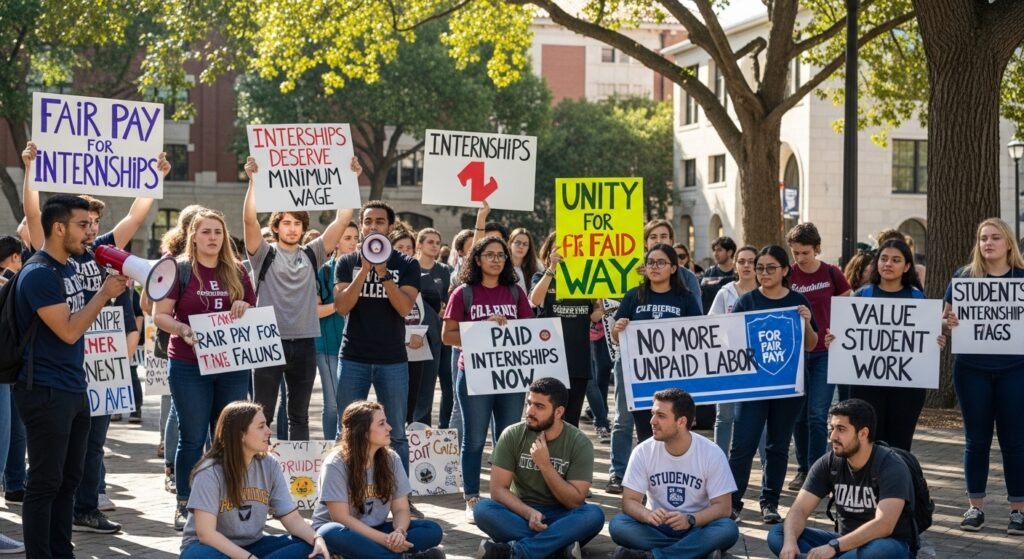
The student movement requires only that employers follow legal requirements to pay their workers the minimum wage. They maintain that any value their work brings to a company deserves recognition through monetary compensation, even if they hold the title of “intern.”
