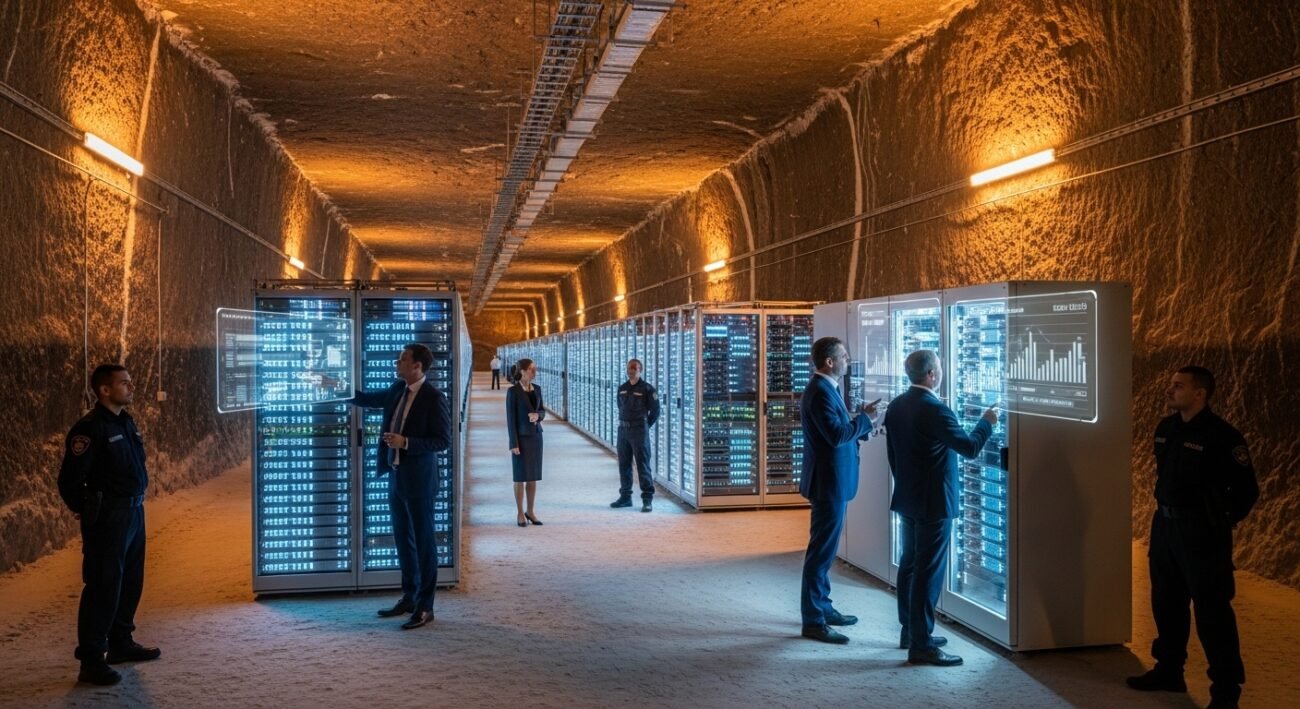
The world’s ultra-wealthy need protection methods that go beyond cloud storage and home safes to secure their most important digital and physical assets. To shield themselves from cyberattacks, solar flares, and social disorder, the 1% now store their data in abandoned salt mines. These “Wealth Vaults” offer a level of geological and environmental stability no surface location can match.
Natural Electromagnetic Shielding
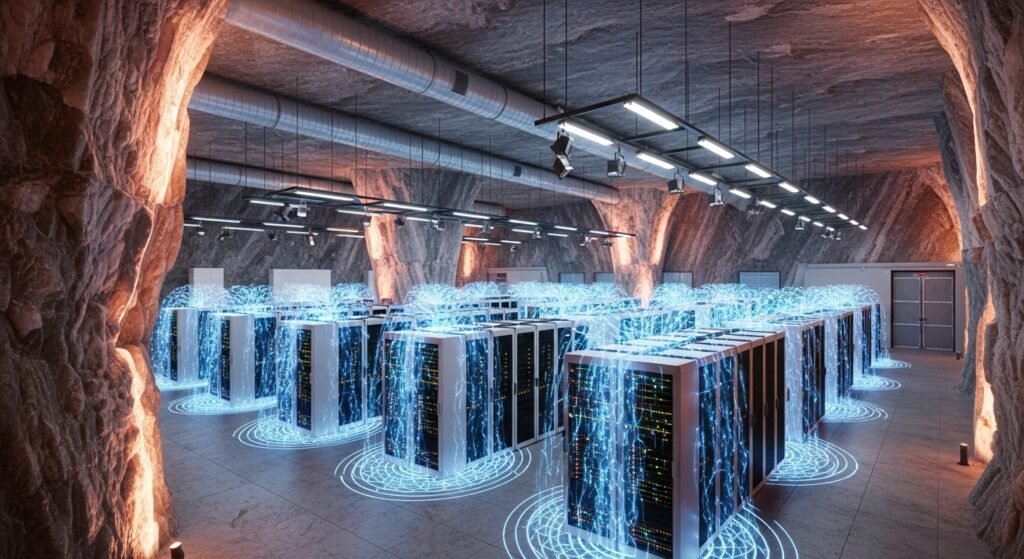
Salt mines sit hundreds of feet underground, encased in thick layers of solid rock and salt. This natural barrier works like a “Faraday cage,” shielding sensitive servers and hard drives from solar flares and electromagnetic pulse (EMP) attacks that could destroy electronics above ground.
The “Self-Sealing” Rock Benefit
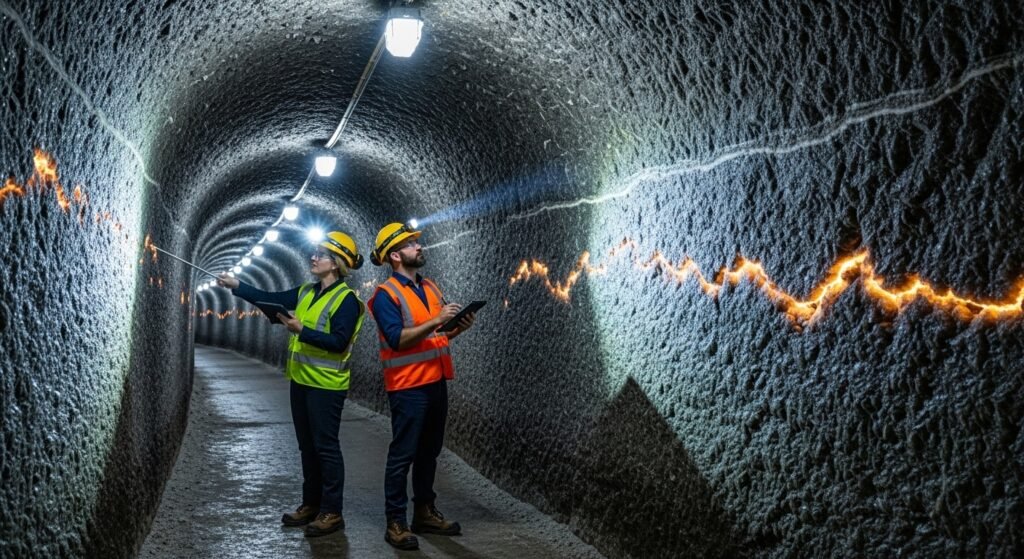
Unlike limestone and granite, salt has “plastic” qualities that let it slowly flow and fill cracks and fissures. Mines show outstanding stability and “self-healing” ability, creating spaces that resist collapses and water leaks better than standard mountain bunkers.
Protection from Surface Chaos
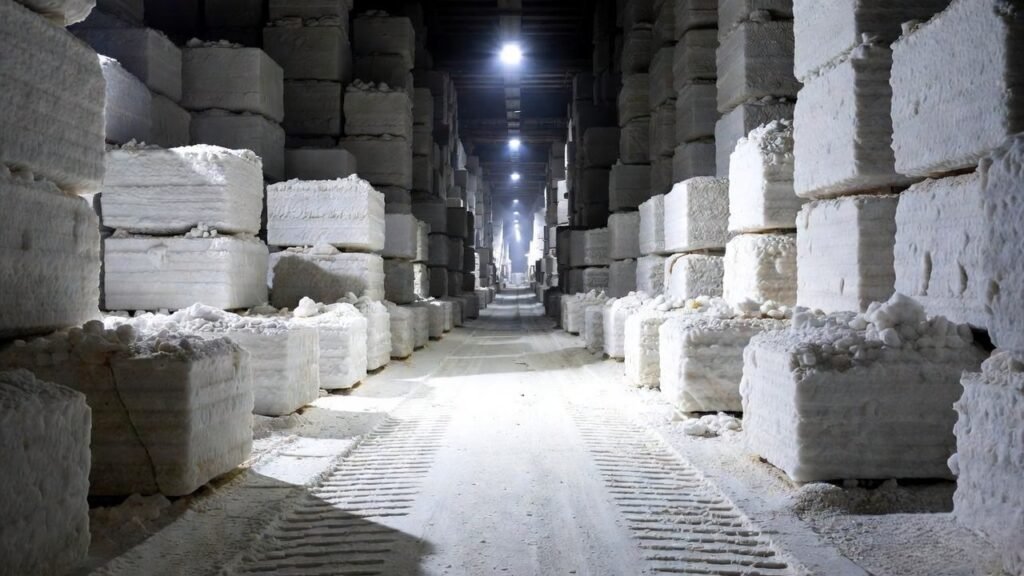
Salt mines are fully protected from surface disasters, including category-five hurricanes, wildfires, and civil disturbances. High-net-worth individuals treat this as “geographic insurance,” keeping financial records and private data accessible during global turmoil.
Invisible to Satellite Surveillance
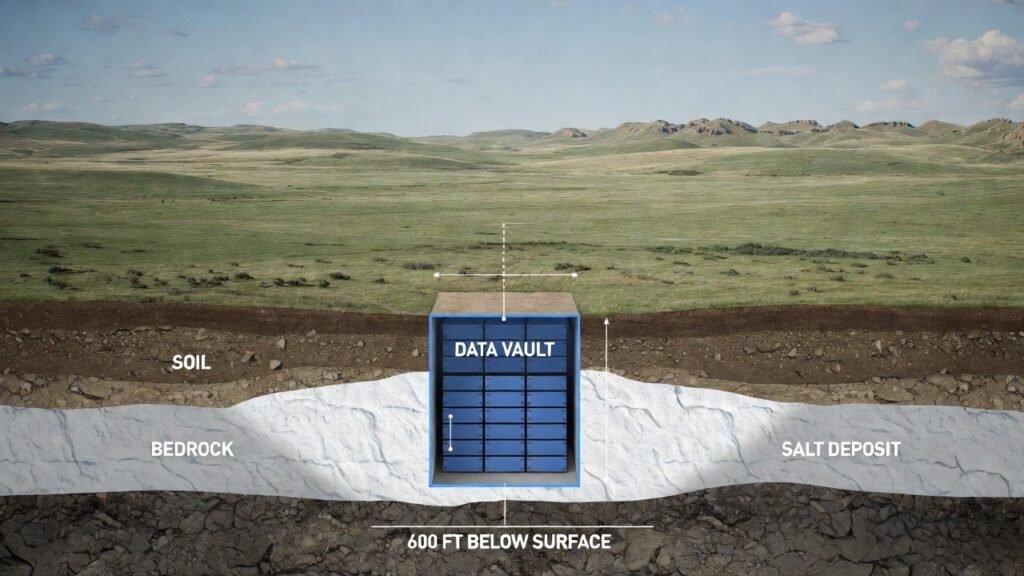
No satellite or drone can detect activity 600 feet underground. Salt mines give users total privacy, with server locations and operations hidden from everyone, including competitors.
Example: Hutchinson, Kansas
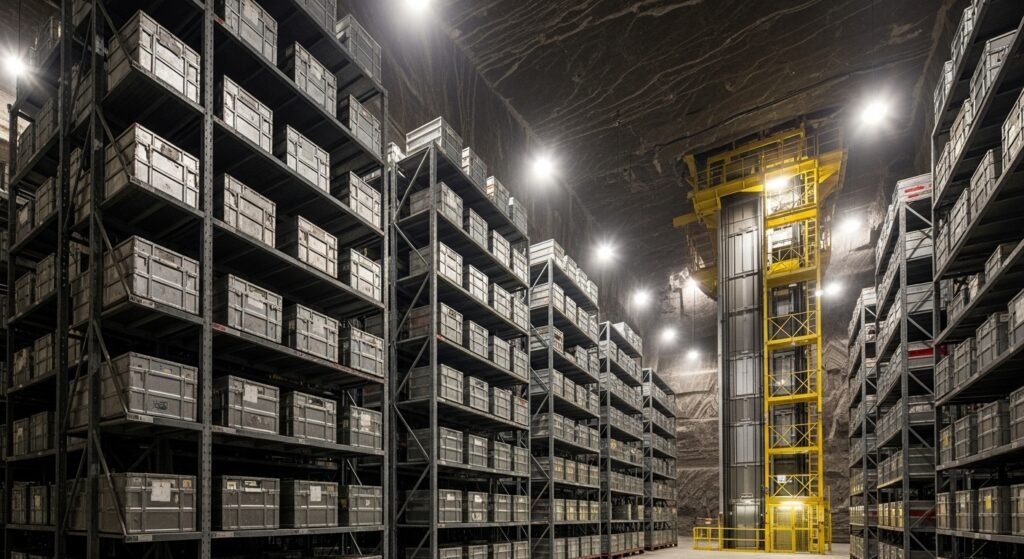
Beneath the Kansas prairie sits an extensive storage complex run by Underground Vaults & Storage (UV&S) inside an active salt mine. It stores Hollywood film reels and government documents, and offers data vaults to private clients who need “deep cold storage” for digital assets.
Atomic-Grade Physical Security
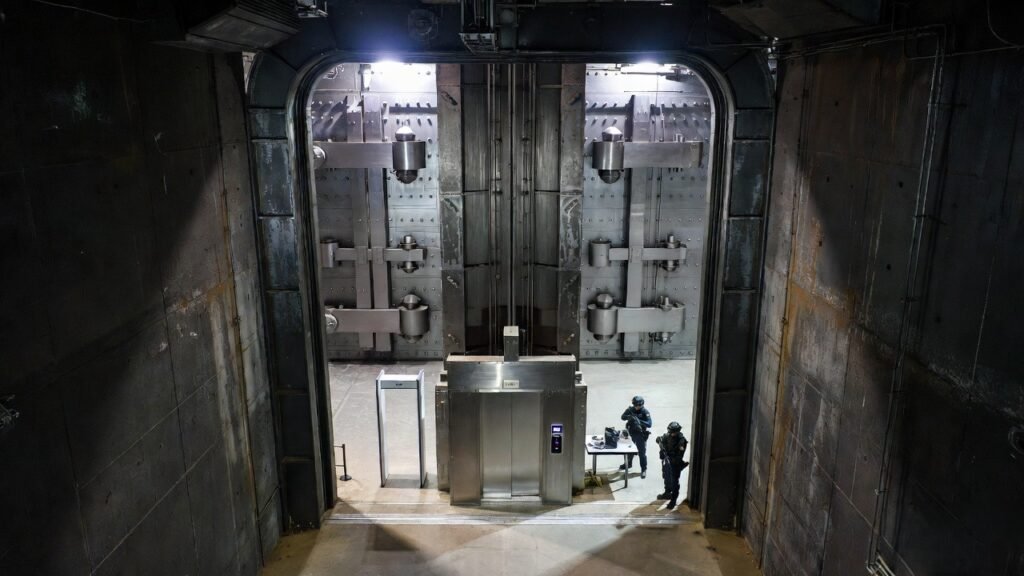
Salt mines allow entry only through a heavy-duty elevator shaft that serves as the single access point. This design is easy to defend. The 1% prefer this “choke point” security because watching one entrance is simpler than guarding a sprawling city data center.
Immunity to Cyber-Physical Attacks
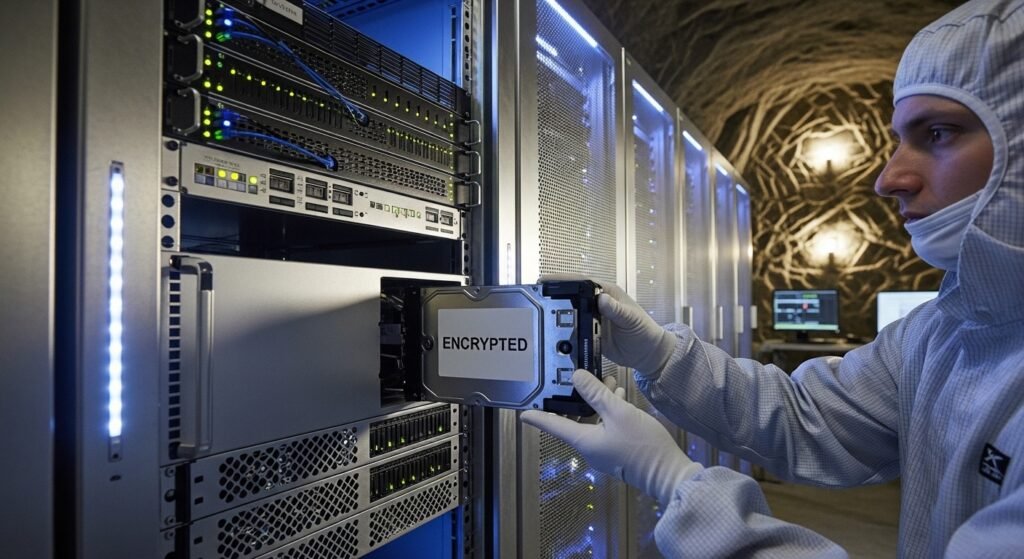
Salt mine vaults use “air-gapped” systems, keeping servers off the public internet. Wealthy clients store Bitcoin private keys and family documents on mine servers that hackers would have to visit in person to reach.
Example: Winsford, England
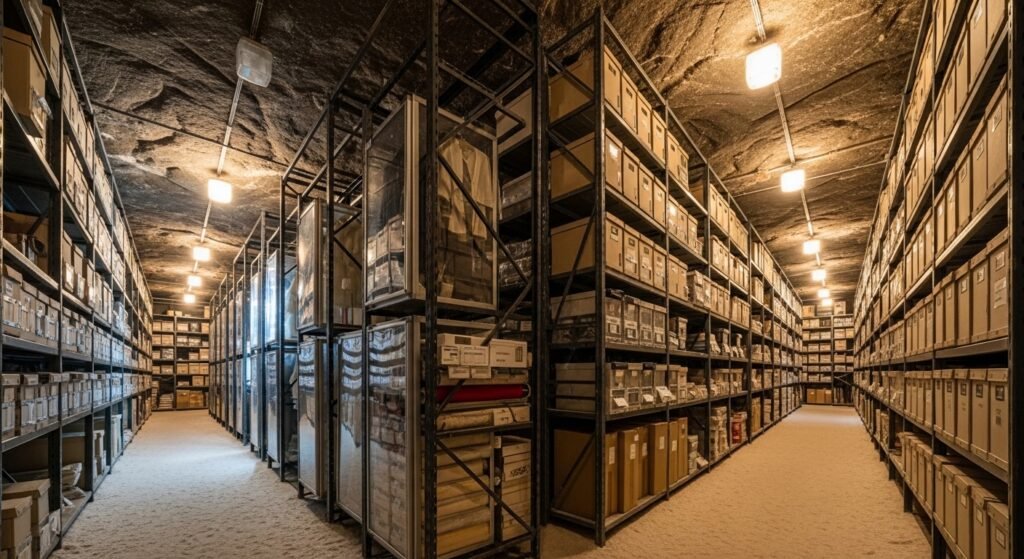
The DeepStore facility in the Winsford Salt Mine stores everything from rare fashion archives to sensitive legal data for elite clients and institutions. At 150 meters deep, its “passive security” costs less than building equivalent protection above ground.
Bypassing Energy Grid Failures
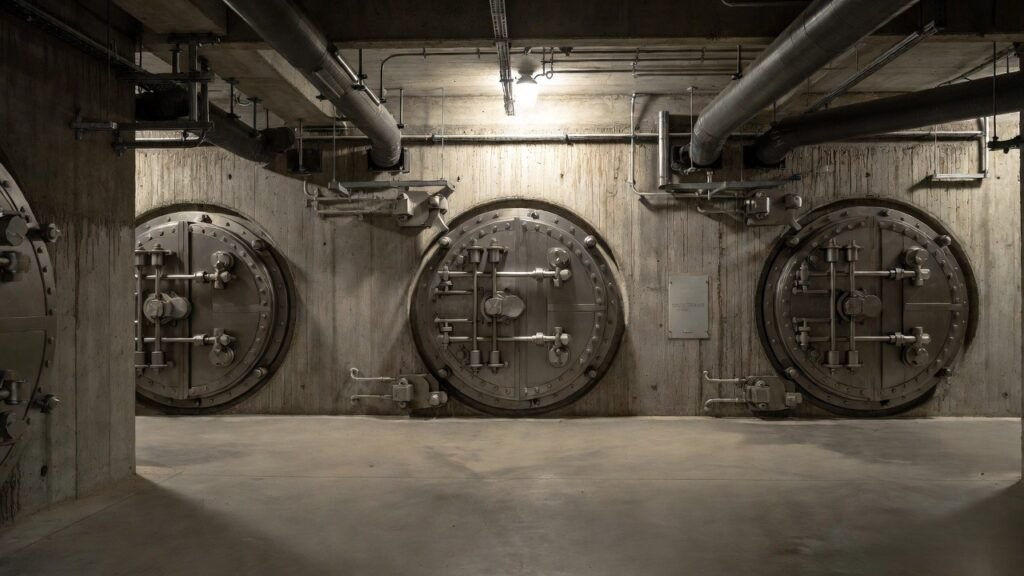
Underground vaults need no cooling fans because the natural environment stays cool, so they keep running when city data centers crash during power disruptions. Backup generators sustain operations for weeks, keeping the “Wealth Vault” active through citywide outages.
A Legal Safe Haven
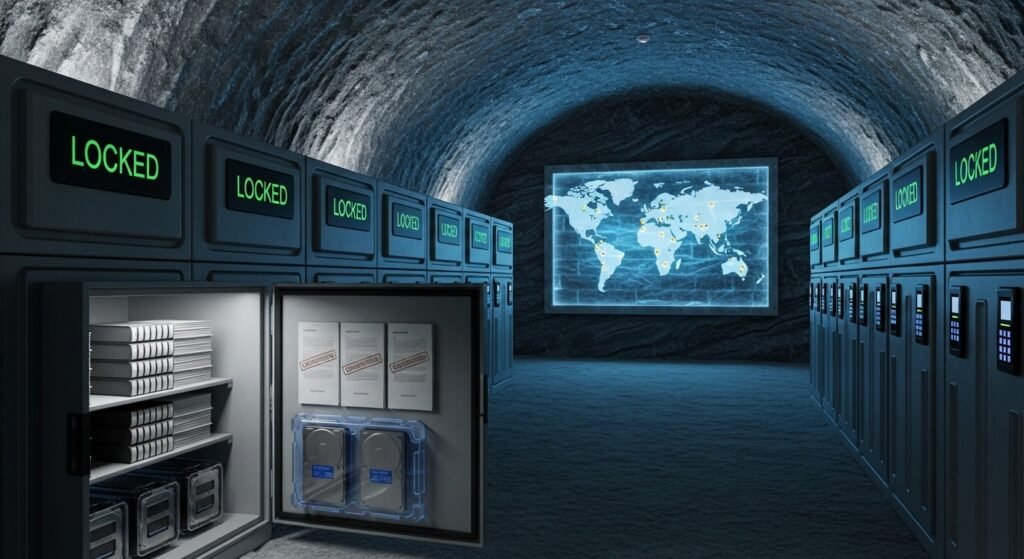
Storing data in international salt mines complicates asset seizure, since different mines sit under different legal jurisdictions. “Sovereign” vaults in neutral-territory mines make unauthorized access and data “freezing” far harder.
