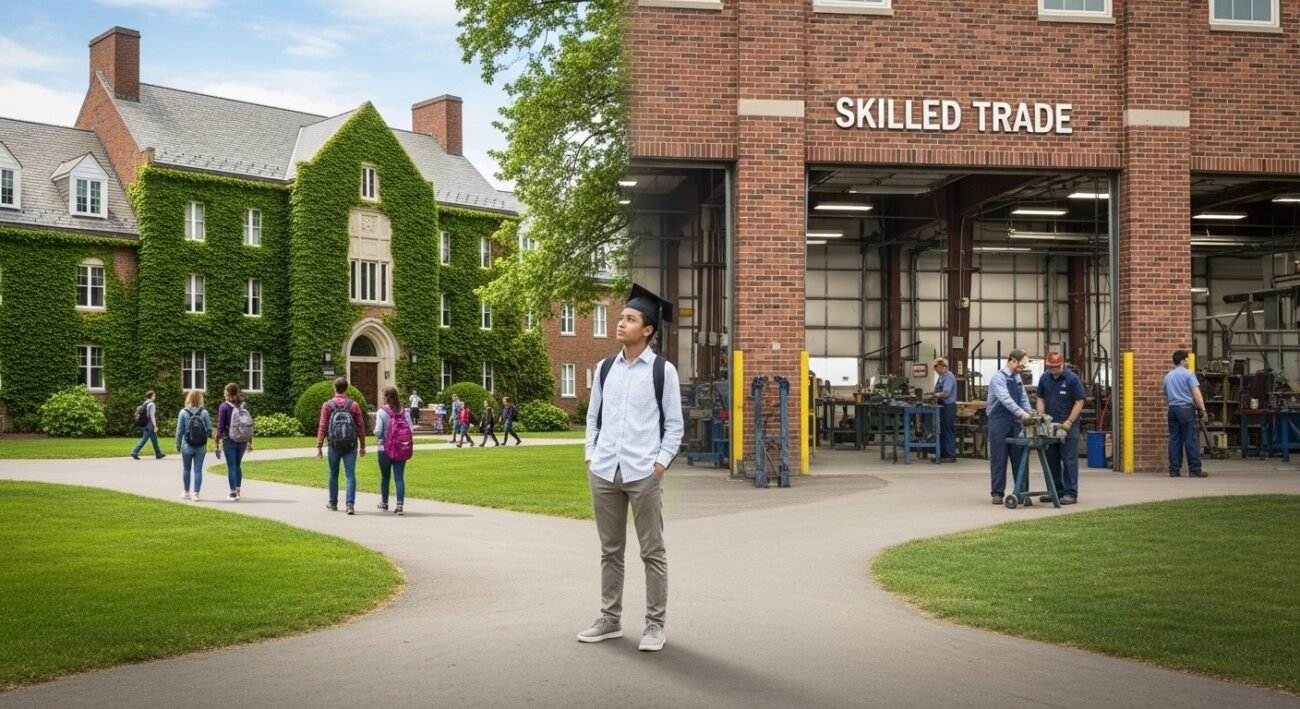
Young men opting out of college has become a major talking point among economists and educators. The old belief that a degree is the surest path to success is fading, and the choices high school boys make now, from trade schools to direct employment, will reshape labor markets and social structures for years.
1. A Massive Shift Toward Skilled Trades

Boys skipping four-year degrees are flooding into vocational programs. Electricians, plumbers, and HVAC technicians are in high demand, and a new generation of debt-free tradespeople is strengthening the hands-on economy.
2. The Widening Gender Gap on Campus

Women now make up the majority of U.S. college students, and the trend points toward women dominating medicine, law, and management. The resulting “gender flip” in professional spaces will transform office cultures and leadership.
3. The Rise of the “Gig” and Creator Economy

Many young men are betting on themselves through online platforms: YouTube channels, apps, and solo businesses instead of four years of lectures. Self-taught skills and entrepreneurship are becoming viable alternatives to diplomas.
4. Lower Lifetime Earnings Potential

The data is clear: degree holders earn more over a lifetime. Men who skip college risk lower household incomes and less job security, leaving them more exposed when the economy turns.
5. Increased Focus on Mental Health

Disengaged students do not just need tougher standards; they need different models. Boys often thrive with hands-on, interactive learning, and schools are being pushed to redesign education around how young men actually learn.
6. The High Cost of Student Debt Avoidance

For many boys, it is a financial calculation. Watching older siblings drown in student loans makes the risk feel unjustifiable, and rising tuition may eventually force universities to cut prices to win students back.
7. Growth in “Alternative” Credentials

The future rewards what you can do over where you went. Short-term certifications and micro-degrees in tech and manufacturing let young men start earning at 18 or 19 without the four-year commitment.
8. A Decline in Professional Diversity

Education and social work already struggle with low male representation. A widening college gender gap threatens to make these fields even more female-dominated, leaving boys with fewer male teachers and mentors to look up to.
9. Increased Competition for “Blue-Collar” Jobs

More men chasing the same high-paying manual jobs means fiercer competition. Construction wages are strong now due to labor shortages, but a flood of new workers could eventually push pay down.
10. Political and Civic Shifts

Education shapes worldview and voting patterns. A growing education gap between men and women risks deepening political divides within families and communities, challenging future leaders to bridge them. The college opt-out is not just a personal choice; it is a societal shift. How schools, employers, and policymakers respond will define opportunity for a generation.
