
Remote work has introduced a dangerous phenomenon called “Shadow Productivity” which causes employees to complete “performative” tasks for the purpose of demonstrating their busyness. Workers need to create a digital record of their work because managers lack visibility into their team activities. Companies are experiencing major decreases in their operational results because employees need to demonstrate productivity.
The “Green Light” Anxiety

The remote workers experience strong anxiety about their Slack or Teams status changing to yellow notification which indicates they are currently inactive. Employees waste their work hours because they use “mouse jigglers” which create screen activity to maintain their status as “active” instead of completing their real assignments.
Instant Reply Syndrome

Employees stop their deep concentration work to respond to a non-urgent message that arrived five seconds ago. The method of “speed of reply” functions as a deceptive measurement that organizations use to assess employee productivity while output quality decreases.
Meeting for the Sake of Visibility
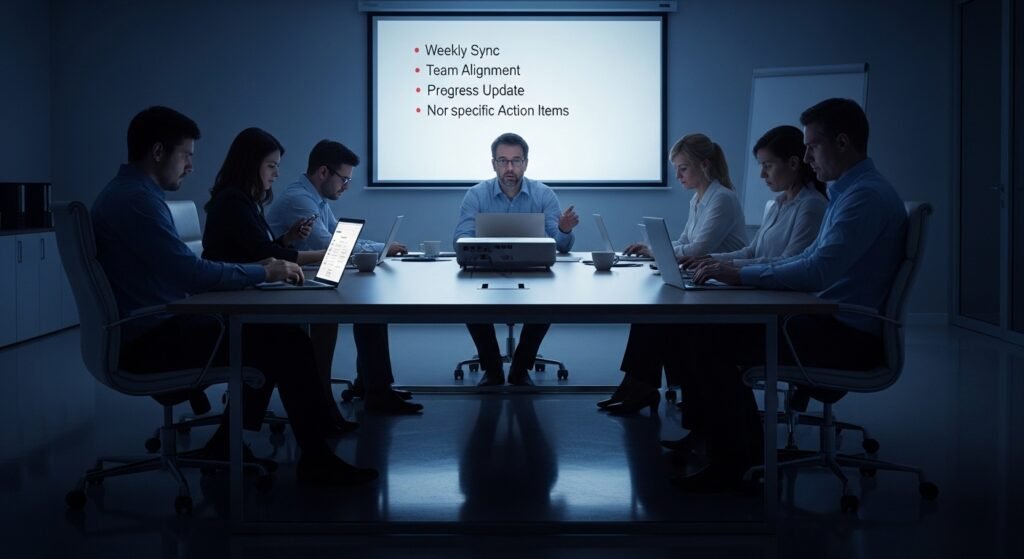
Shadow productivity appears through workers who schedule numerous “sync” meetings that lack any specific meeting objectives. Workers attend these meetings to establish presence with the leadership team despite the fact that the essential information should have been delivered through a brief email.
The “After-Hours” Email Ghost

Some employees send email messages at 9:00 PM or 6:00 AM according to their planned schedule. The work pattern creates an impression of continuous work which compels coworkers to extend their work hours to match others’ activities.
Over-Reporting Small Wins

Workers choose to communicate about five minor updates instead of completing their primary task. The team experiences “status update bloat” which creates the false impression of progress while the team fails to achieve its crucial quarterly objectives.
The Browser Tab Trap

The situation of shadow productivity occurs when people choose to maintain many active work tabs because they believe doing so demonstrates their productivity but this behavior actually causes mental confusion which results in “task switching” fatigue instead of achieving one complete task.
Performative Document Editing

Some staff members use Google Docs to make minor format changes which serves no purpose except to display their name on “version history.” The document users demonstrate their “active” participation in the document through their document activity.
The “Always-On” Camera Fatigue

The Teams platform requires employees to keep their webcams active throughout all virtual meetings to demonstrate their “active participation.” The workers develop “stage presence” exhaustion because they need to maintain their facial expressions while they handle the problem which requires their total cognitive capacity.
Data Entry as a Shield

Workers select dull manual data entry duties instead of facing challenging creative tasks because they find data entry work to be “measurable.” Managers prefer to see complete spreadsheets because they need less effort than showing them complicated strategy documents which remain unfinished.
Notification Overload as Proof

The project channel success evaluation process requires teams to count how many messages they receive in their project channels. The system creates a workplace environment where employees who speak the most in the application get considered as the most productive workers.
The “Weekend Warrior” Illusion

Workers access their systems on Sunday to remove all notifications which makes them seem more productive than their Monday counterparts. The body needs this time to restore its energy which should be used for work later in the week.
