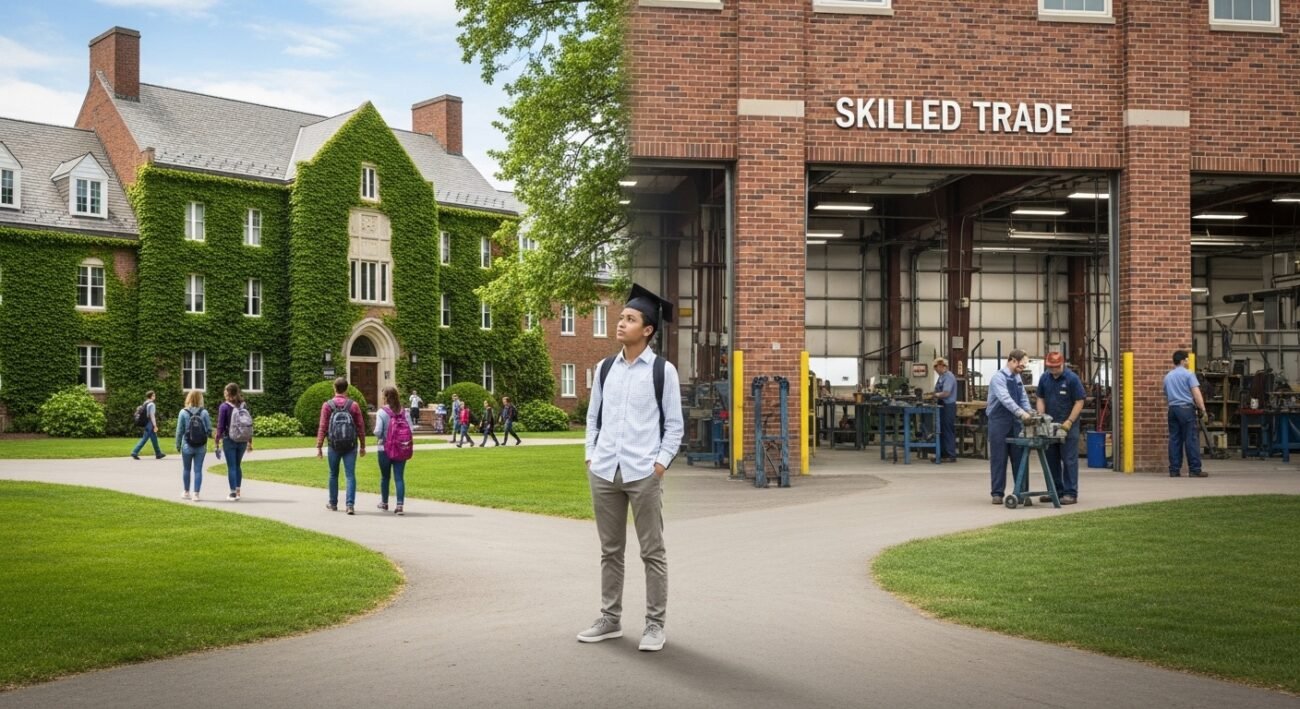
The trend of young men opting out of higher education has become a significant talking point among economists and educators. People used to believe that a college degree represented the most important requirement for achieving success but this belief has started to change. The educational choices of high school boys who now prefer trade schools or direct employment or alternate certification paths will create lasting effects on labor markets and social structures.
A Massive Shift Toward Skilled Trades

Many boys who avoid traditional four-year degrees are now entering vocational training programs. The training program supplies essential workforce resources for electricians and plumbers and HVAC technicians. The economy will develop into a stronger “hands-on” sector when a new generation of tradespeople who possess high earning potential and no student debt enters the workforce.
The Widening Gender Gap on Campus

Women now represent the majority of college students throughout the United States and in upcoming years, women will represent the majority of doctors and lawyers and managers because of this change. More women will reach top leadership positions which generate the highest income across the nation because professional spaces will experience a “gender flip” that transforms office cultures.
The Rise of the “Gig” and Creator Economy

Young men make investments in their potential through online platforms. They prefer to create content on YouTube or develop apps or manage their own enterprises instead of attending school for four years. The future educational system will require people to acquire self-taught abilities and entrepreneurship skills together with formal diplomas.
Lower Lifetime Earnings Potential

Statistical data reveals that degree holders earn more throughout their lives compared to people who do not hold a degree. Experts believe that men who choose to skip college will create a situation where household incomes decrease and financial stability risks increase during economic downturns because degree holders enjoy better job security.
Increased Focus on Mental Health

Students who lack interest in their studies decide to quit college, schools must adopt new educational models that focus on practical learning because boys require more interactive learning experiences. The current educational system needs a better approach to support the particular learning requirements of young men.
The High Cost of Student Debt Avoidance

The decision to attend college or not depends on financial considerations for many boys. They observe their older siblings dealing with substantial debts and they determine that the potential benefits do not justify taking on such a considerable risk. Students have been forced to leave college because tuition costs keep rising which will compel universities to decrease their fees in order to attract students back to their campuses.
Growth in “Alternative” Credentials

The future will depend more on “what you can do” than on “where you went” for education. The educational framework now requires short-term certifications and micro-degrees in tech or manufacturing to become the baseline requirement. The program enables young men to begin work immediately after they turn eighteen or nineteen.
A Decline in Professional Diversity

The fields of education and social work already have low male representation among their current workforce. The male-female college attendance gap will make these fields even more male-dominated. School environments which lack male teachers and mentors create challenges for boys who need to see male role models as their identification points.
Increased Competition for “Blue-Collar” Jobs

The number of men who decide to skip college will cause more people to compete for high-paying manual labor positions. The construction industry currently offers excellent wages because of its labor shortage however this situation will change when more workers enter the field. The industry will establish wage reductions which force employees into competitive job battles because it will progressively decrease salary levels.
Political and Civic Shifts

The educational attainment of individuals serves as a determining factor for their worldview while simultaneously influencing their voting decisions. The educational gap between men and women will lead to more political disagreements within families and community groups. The public will need to overcome their different perspectives so future leaders can achieve their goal of uniting a divided population.
