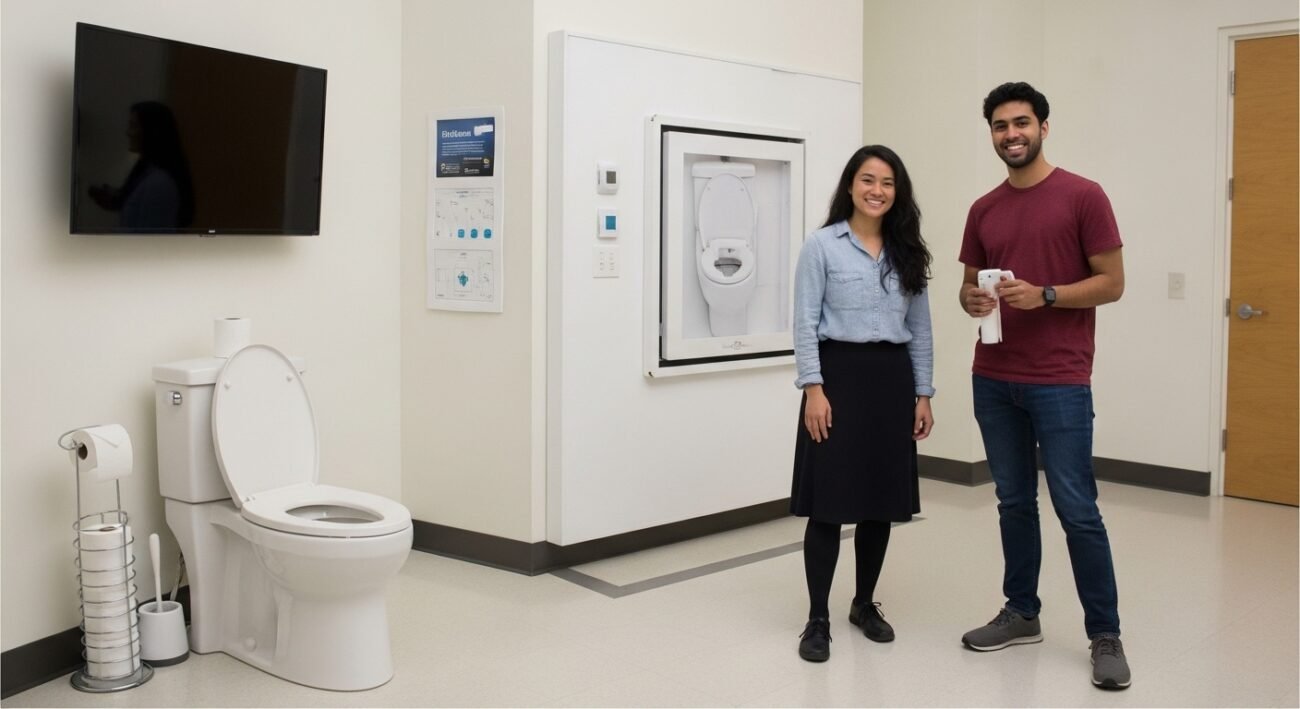
Stanford University is using a “Smart Toilet” project to teach students about the future of medicine and the power of “invisible” health data. People use this system to collect their regular bathroom habits which the system transforms into a health monitoring service. The lesson demonstrates to students that essential medical information originates from our daily activities instead of coming from medical appointments.
The Passive Monitoring Concept
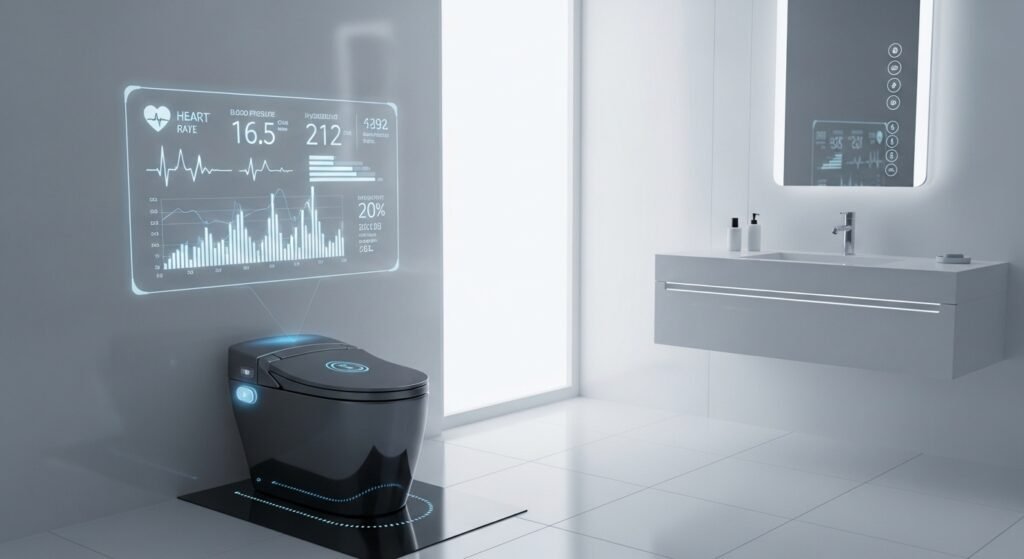
The Smart Toilet operates as a data collection device which gathers information without requiring any additional actions from users. It teaches students that “passive” data collection is more accurate than “active” tracking (like logging food in an app), because humans often forget or lie about their habits, but the toilet stays objective.
The “Precision Health” Vision
Stanford professor Sanjiv Gambhir developed this to catch diseases before symptoms appear. Students learn that monitoring waste over extended periods enables detection of early cancer and kidney failure symptoms before patients experience any medical difficulties.
The Pressure Sensor Baseline

The toilet employs high-speed cameras and pressure sensors to assess the urine stream pattern. This measurement used in real life teaches students how physical data can determine prostate conditions and urinary tract infections through non-invasive methods.
Stool Analysis for Gut Health
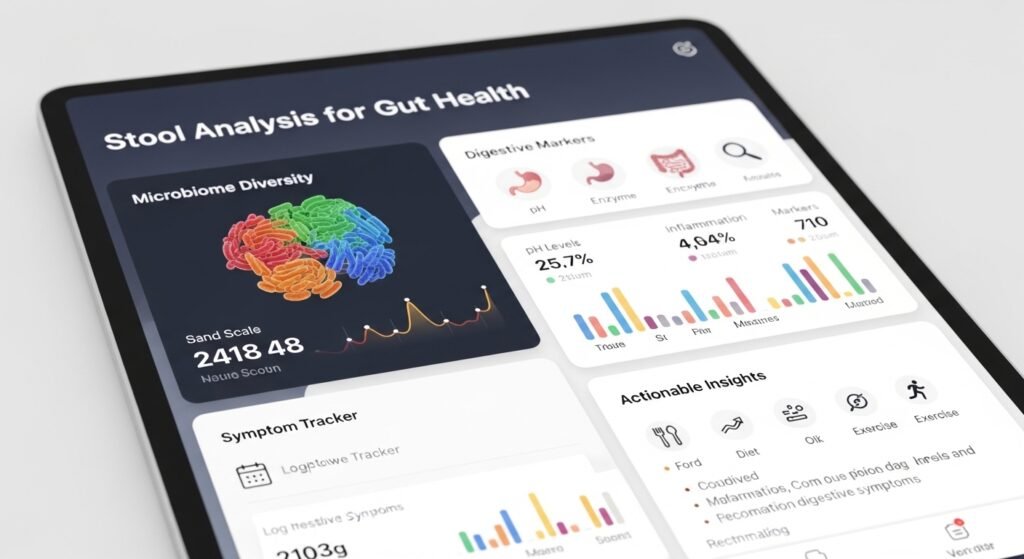
The system uses AI to categorize waste based on the Bristol Stool Scale. Students see how “computer vision” can monitor a person’s microbiome and fiber intake, providing a daily report on their digestive health and diet effectiveness.
Molecular Scanning
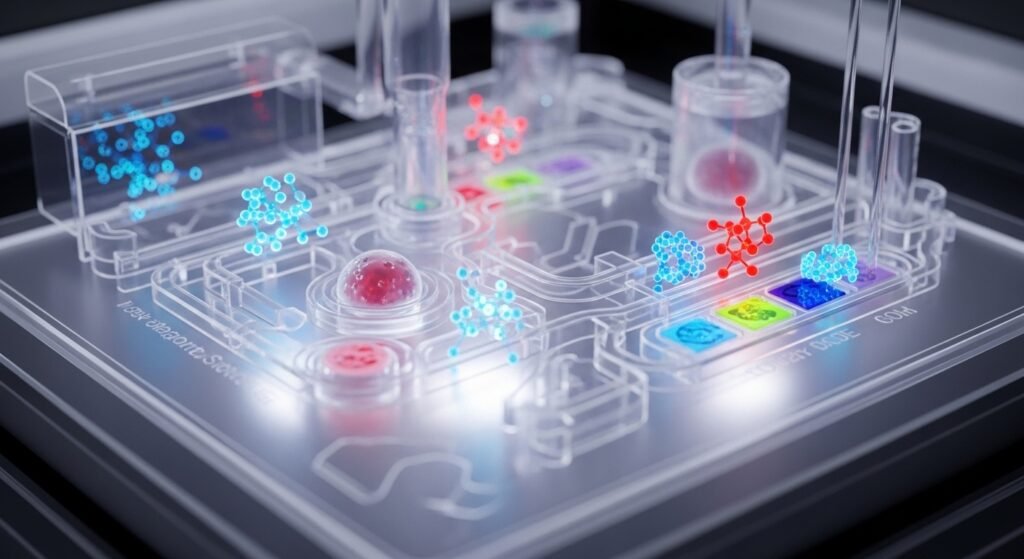
The toilet system analyzes waste products through urinalysis strip testing for glucose concentrations and white blood cell numbers. This teaches students how “lab-on-a-chip” technology can monitor diabetic patients or detect hidden infections automatically.
Predicting Viral Outbreaks

Researchers track virus particle increase through campus waste assessment which occurs before people exhibit coughing symptoms and students learn how bathroom data can act as an early warning system for the next pandemic.
Real-Time Hydration Alerts
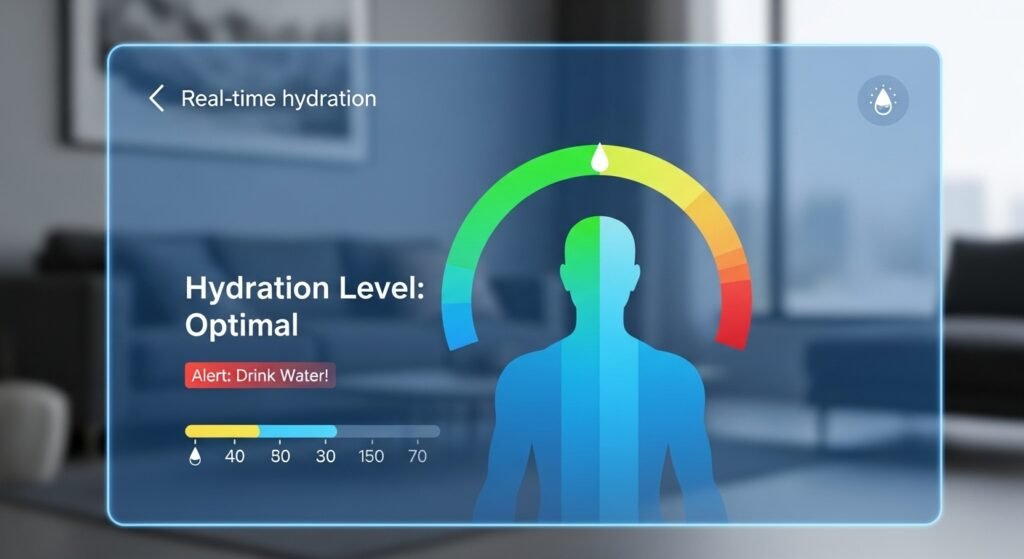
The toilet system can detect student dehydration by analyzing urine concentration levels. The solution demonstrates how bio-feedback technology can lead to immediate changes in daily behavior through its straightforward application.
Standardizing the “Flush”
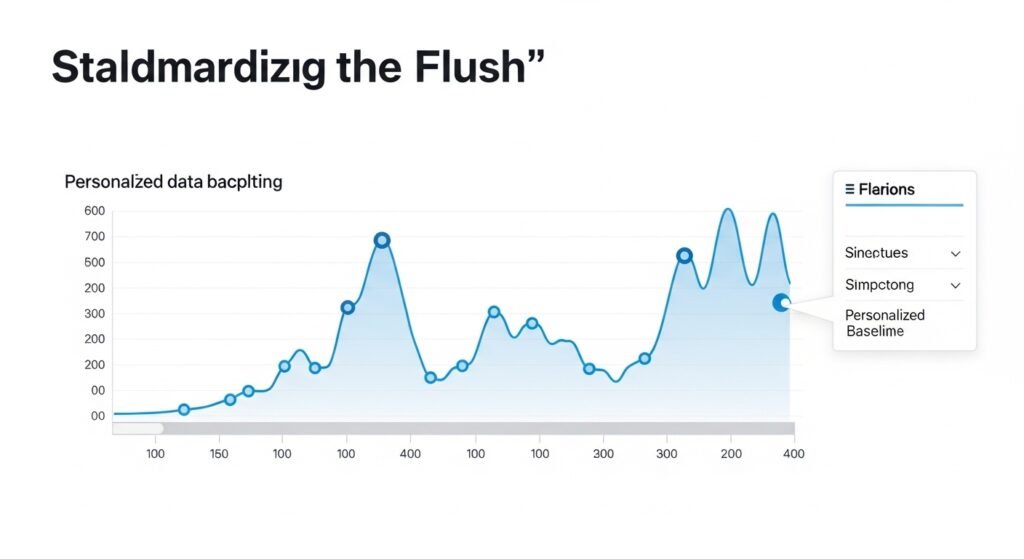
The students learn about scientific research which deals with the benchmark problem that scientists encounter. Because everyone’s habits are different, the AI must learn a person’s “normal” over weeks so it doesn’t trigger a false alarm just because they had a spicy meal.
The Future of the “Home Lab”
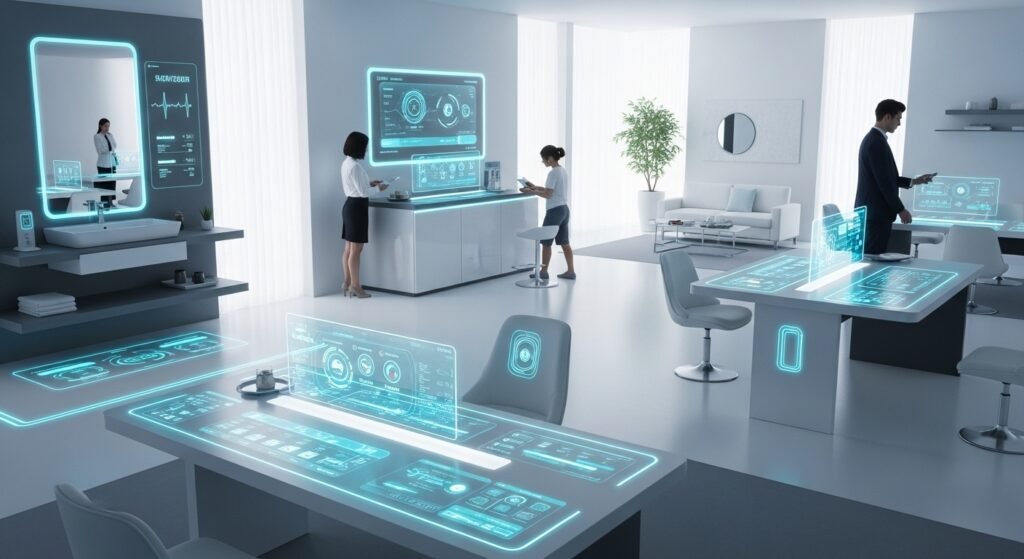
The lesson demonstrates that hospitals will eventually expand into home environments as their newest operational territory. Students are shown that the “Smart Toilet” is just the first step in a world where our furniture monitors our health to keep us out of the ER.
