
Building wealth depends more on your ability to save money than on your total income. High-income individuals also experience net worth decline through stealth traps which operate without their awareness. The individual requires continuous spending for these leaks while they believe they have sufficient financial capacity to meet their expenses. The financial capacity loss caused by these leaks represents a major growth opportunity which could benefit them in the long run.
The “Lifestyle Creep” Upgrade

Many people choose to buy better cars and bigger houses and better clothes when their income increases. This phenomenon of spending more money when people receive higher incomes is called lifestyle inflation. The professional who receives a salary increase which doubles their pay ends up with identical savings because their mortgage costs have also increased to twice the previous amount.
Ignoring Low-Interest “Leakage”

Wealthy individuals tend to disregard small regular expenses which include premium streaming bundles and club memberships and high-end app subscriptions. The $200 monthly expense appears insignificant. However, over two decades the invested amount would have grown to almost $100,000. The financial impact of these micro-leaks leads to significant losses of wealth.
Speculative “Fomo” Investing

Wealthy individuals tend to invest their money into cryptocurrencies and tech startups and meme stocks after hearing about easy pathways to wealth. The 2022 NFT crash serves as a case study which demonstrates how high-earning professionals lost millions when they pursued digital trends which they didn’t understand because of their excitement about the latest technology.
The Total Cost of Ownership

People evaluate luxury items based on their sticker price but they fail to consider the costs which arise after their initial purchase. The European sports car which costs $100,000 needs specialized insurance and premium fuel and $2,000 brake jobs for its maintenance. The maintenance expenses of these vehicles reach a point where they become equivalent to the car’s initial value within several years.
Overpaying for Convenience

People make the mistake of disregarding convenience costs even though they understand that time equals money. Thousands of dollars can be spent annually on food delivery services which people order every day and on concierge services which they use for five-minute tasks. Wealthy people spend money on things which they believe will save them time but actually reduce their ability to work efficiently.
Idle Cash and Inflation
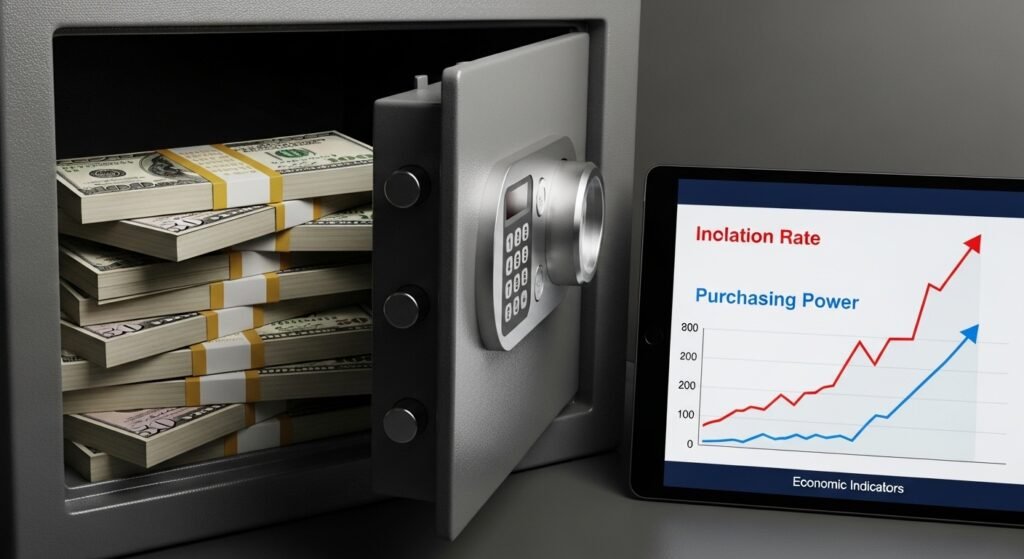
People frequently find themselves unable to resist the temptation of keeping excessive funds in their basic savings account. The cash storage method provides a sense of security. However, annual inflation causes the value of stored cash to decrease. The $1 million stored in a drawer will lose $30,000 of its value after 12 months because of a 3% inflation rate.
Neglecting Tax Optimization

High-earning individuals end up paying excessive taxes because they fail to utilize tax savings methods such as tax-loss harvesting and tax-deferred account contributions. People who do not create tax plans experience greater financial losses than those who encounter a bad stock market year.
Emotional Generosity

The act of giving substantial amounts of money to relatives or friends without establishing a proper system functions as an economic trap. The case studies which exist in the real world demonstrate that people who receive financial assistance will become dependent on the funds which they received permanently.
The Professional Athlete Syndrome

People tend to purchase items which lose their value quickly after they buy jewelry and boats and high-fashion clothing. Athletes who achieve fame lose all their money because they invest their earnings into items which lose all their value once they become used.
Underestimating Medical “Black Swans”

People who earn high salaries tend to skip purchasing complete insurance because they believe their cash reserves provide enough protection against emergencies. A major health crisis or a requirement for extended specialized care will result in costs exceeding hundreds of thousands dollars which will destroy all savings accumulated over several years.
