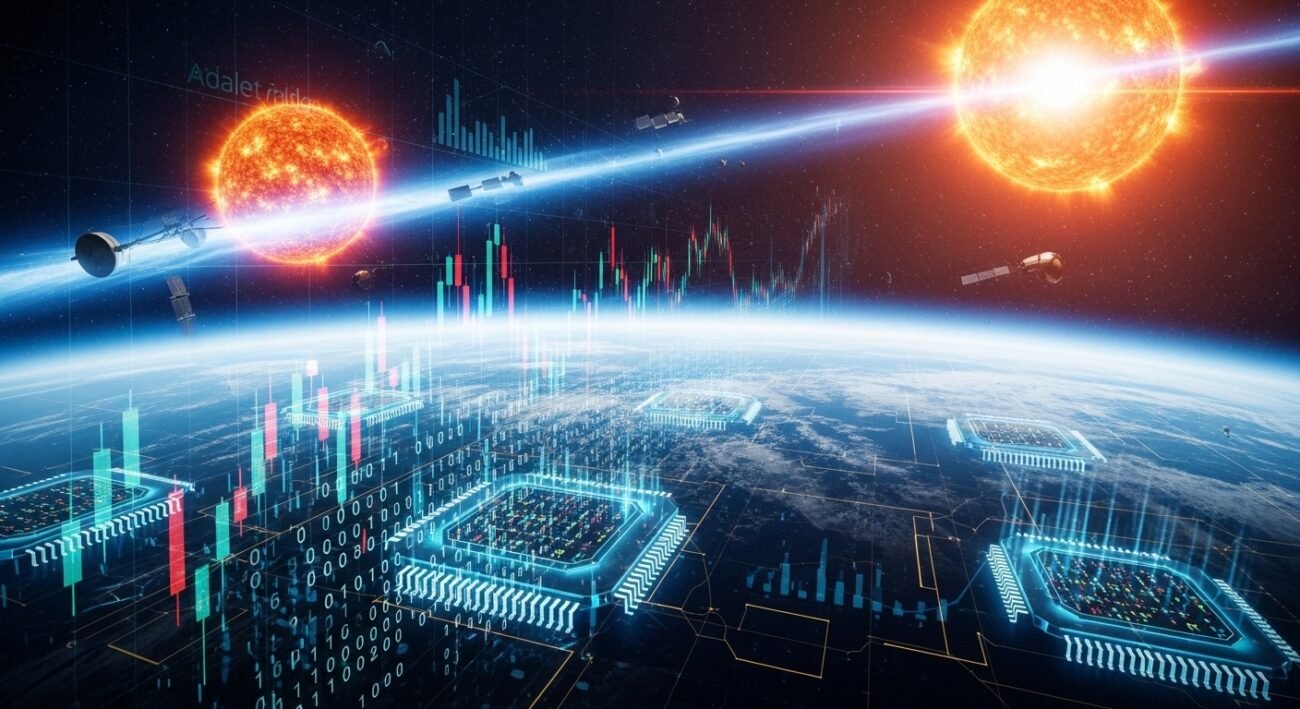
The digital finance industry experiences market crashes because even distant cosmic events disrupt its operations. The term “Cosmic Blasts” describes solar flares and cosmic rays which produce high-energy particles that disrupt the silicon chips driving worldwide stock market operations. Financial mathematicians must transform their formulas because trading now occurs at sub-millisecond speeds which require them to include “astronomical” risks that used to be disregarded.
The Bit-Flip Glitch
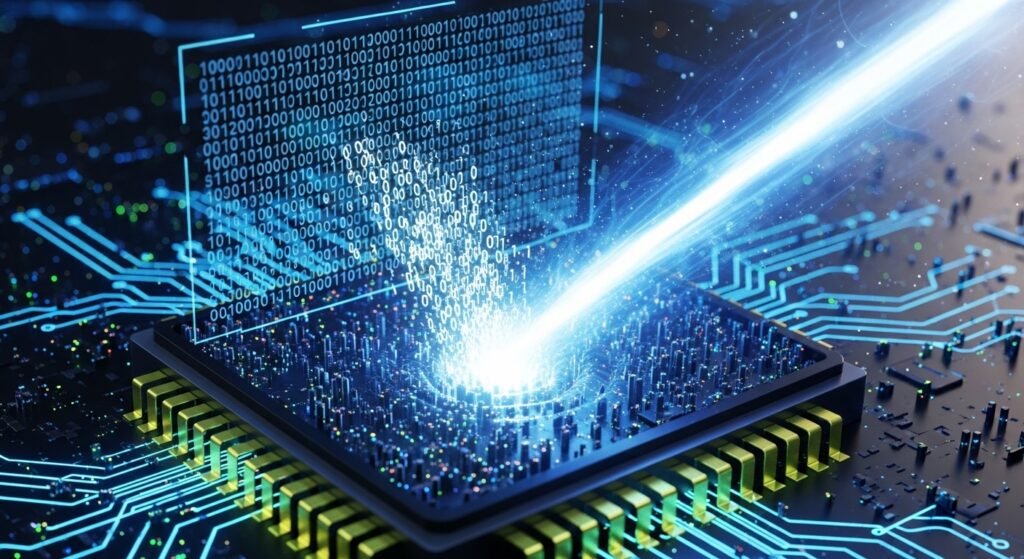
A cosmic ray hitting a computer chip causes a “0” to change into a “1.” This situation allows a financial operation that costs $100 to become a transaction worth $1,000. In Belgium during the 2003 election, a bit-flip created 4,096 phantom votes which added to a candidate’s vote count.
Solar Flares and Satellite Lag
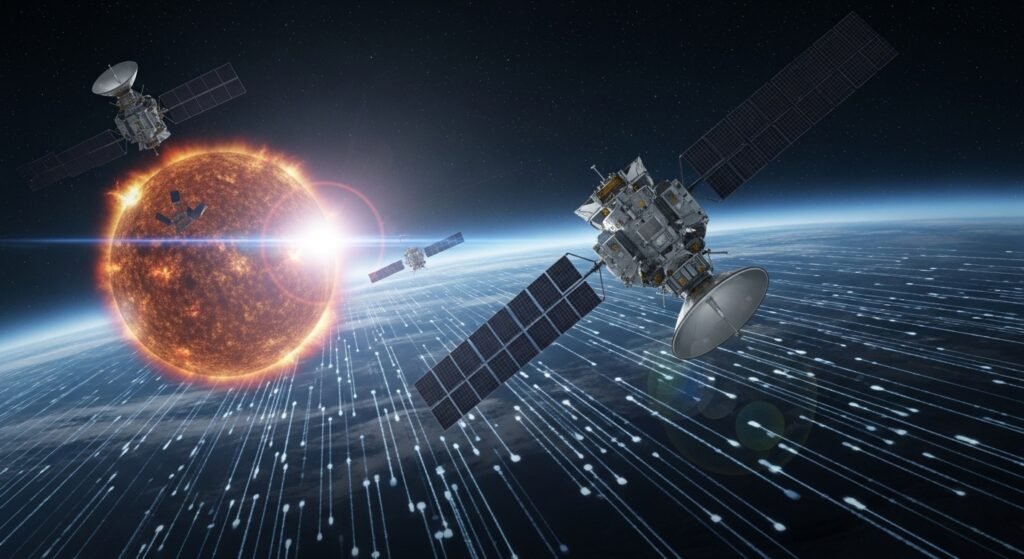
Traders who conduct high-frequency trading depend on GPS satellites to achieve nanosecond-perfect timing. The air becomes ionized when a solar blast occurs, which results in satellite signals experiencing brief interruptions. Global markets need precise timing because even tiny delays of a few microseconds can cause “flash crashes.”
The 1989 Quebec Blackout

A solar storm of great intensity caused the power system in Quebec to experience a complete blackout for nine hours. Financial systems now consider “Space Weather” to be a risk factor because present-day space weather events could disrupt all digital servers which securely store worldwide financial assets.
Redundant Math Systems
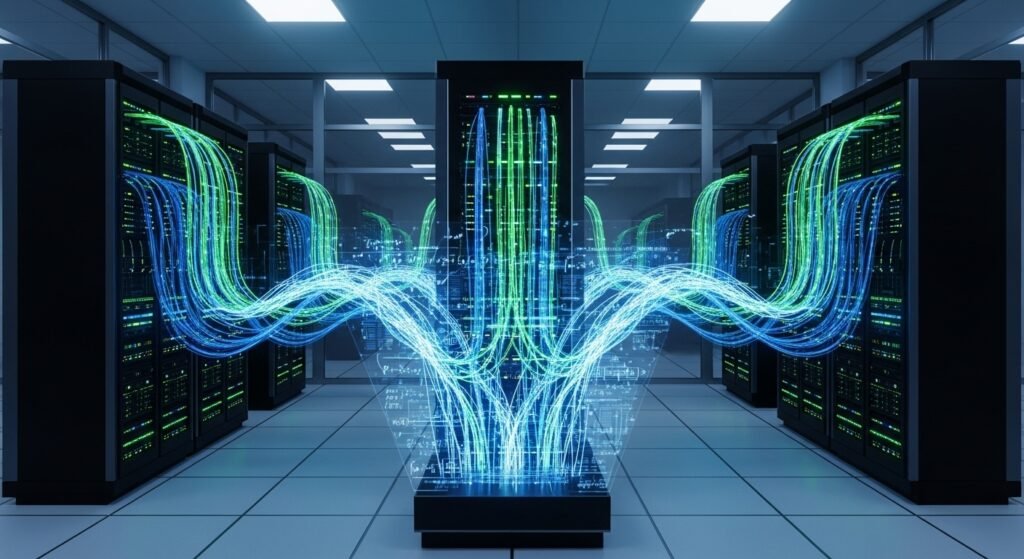
“Triple Modular Redundancy” serves as a bank defense system against cosmic radiation disturbances. The system performs the same computation on three separate chips at the same time. The two remaining chips will “outvote” the first chip’s incorrect answer after it has been struck by a cosmic ray event to maintain data integrity.
Hardened Server Bunkers
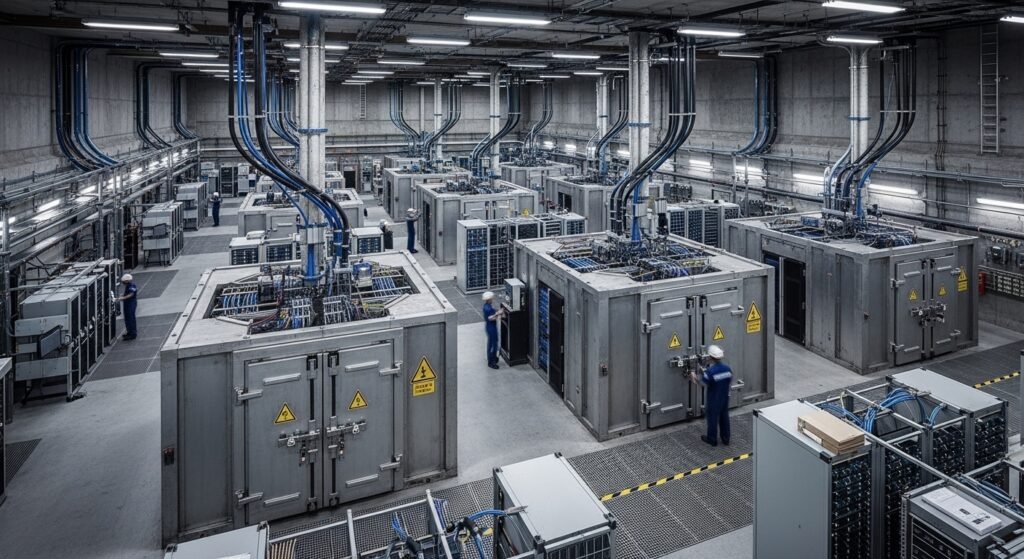
The financial industry transfers its critical information servers to bunkers located underground or within “Faraday Cages.” The lead-based rooms function as a shield against electromagnetic interference, which protects the “ledger” from cosmic rays that could damage the record of ownership.
Error-Correcting Code (ECC) RAM
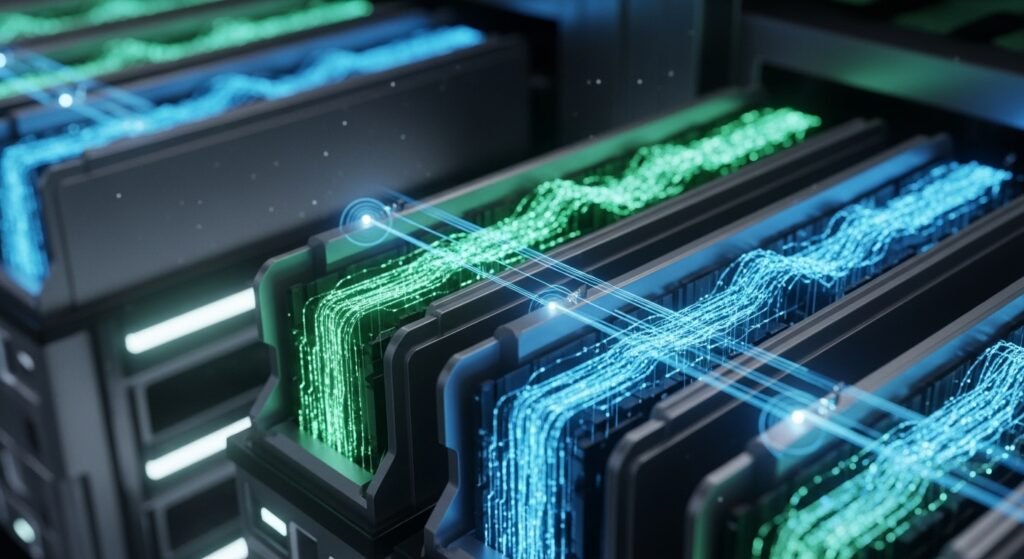
The financial industry now accepts hardware failures as a standard condition. Most trading servers rely on ECC memory which detects and resolves single-bit cosmic ray-induced errors in real-time to prevent bad data from reaching the stock market.
Atmospheric Neutron Tracking
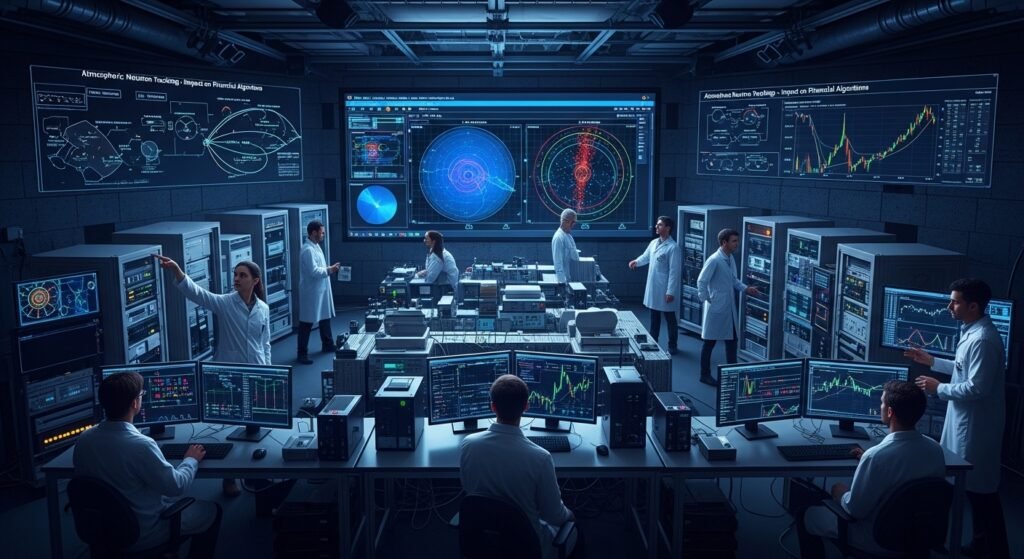
Financial mathematicians now conduct monitoring operations using “neutron monitors” which exist throughout the planet. Neutron levels increase when cosmic rays approach the atmosphere because this indicator shows a high-risk period during which automatic trading bots will perform “hallucinated” trades.
The Carrington Event Risk
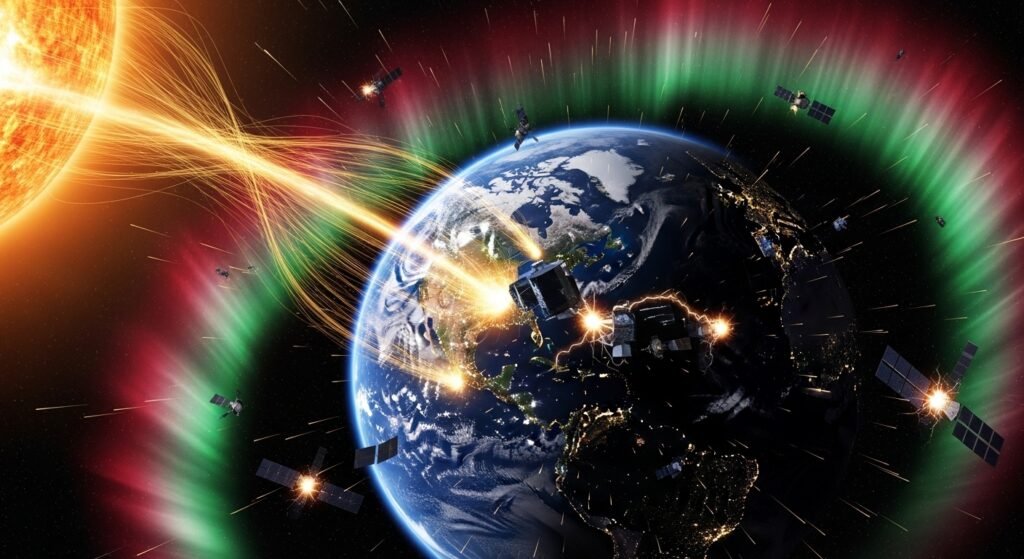
The term “Black Swan” which represents financial mathematical events originated from the “once-in-a-century” solar storm that occurred in 1859 and caused telegraph wires to ignite. The event would destroy every digital record maintained by banks worldwide.
Redefining “Safe” Assets
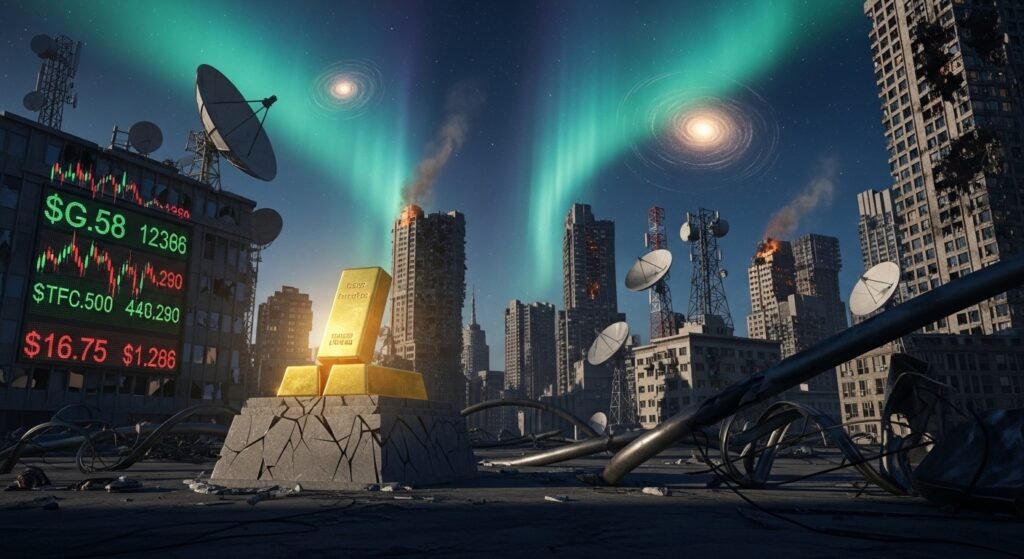
The financial models have shifted their asset valuation back to physical property because both Bitcoin and stocks face potential disruption from cosmic events. A physical gold bar remains the only asset that maintains its “accuracy” following the cosmic blast which destroys internet connectivity.
Quantum Uncertainty in Finance
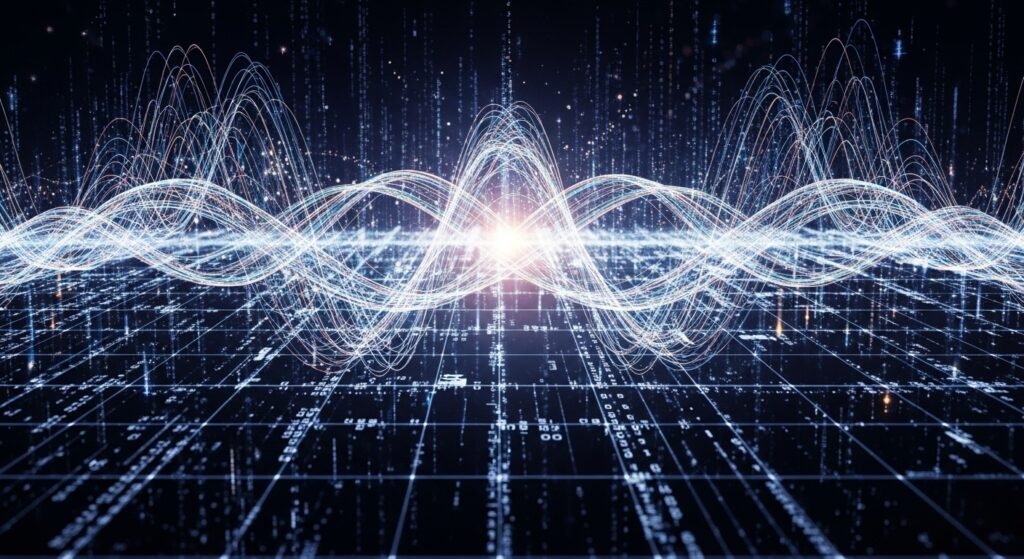
The shrinking size of chips results in their increased vulnerability to cosmic ray emissions. Financial math uses “Stochastic Modeling” which interprets every transaction as a probability instead of a certainty while accounting for “random noise” from outer space.
