
Market volatility can be defined as regular and severe fluctuation of asset prices due to economic fluctuations, world news or investor mood. In recent years, volatility has become a widespread occurrence. It enables investors to review the aspects of return management and risk as well. Most of the modern investors draw their interest into fixed strategies, but they focus on long-term success, flexibility, and other crucial factors. To know more about these impacts, it’s advisable to stick to the entire guide.
Increased Concentration on Risk Management

The volatility of the market has raised the sensitivity of risk in investment planning. Investors are currently very keen on determining the possible losses first and then endeavour to get returns. Stop-loss orders, asset allocation models and risk assessment metrics are common tools.
Greater Significance of Diversification

Unstable markets have strengthened the importance of diversification of assets, sectors and regions. Investors have stopped relying on a single form of investment to make returns. The mixture of stocks, bonds, commodities and other assets is diversified to minimise the risks.
Movement toward Long-Term Investment

The volatility of the market tends to deter short-term speculation and promote a long-term investment mindset. It has seen a shift where the majority of investors are looking to hold quality assets over a long period of time rather than responding to daily fluctuations in prices.
Increasing Demand for Defensive Assets

It has led to volatility, where people have been more interested in defensive assets, which are useful during times of uncertainty. Capital protection is usually done through government bonds, gold and dividend-paying stocks.
Expansion of Alternative Investments

Instability in the market has prompted investors to consider other investments like real estate, private equity, hedge funds and infrastructure. The assets are also usually not highly correlated to the traditional market, providing a benefit of diversification.
Greater role in Professional Advice

Financial advisors have had a large number of investors consulting them due to unpredictable markets. Professional recommendations are in place to construct orderly portfolios, risk management and discipline in the volatile times.
Bias towards Capital Preservation

In dynamic times, capital protection takes priority. Investors are becoming more wealth preservation-oriented instead of high returns-oriented. Preferred are conservative strategies, stable income assets, and less risky investments.
Drive on Quality Investments

Unstable markets have become more focused on quality companies and assets that have sound fundamentals. Investors would love to have business with fixed incomes, low debt and management that is stable. Quality investments will perform well when there is economic strain.
Greater Reliance on Hedging Policy
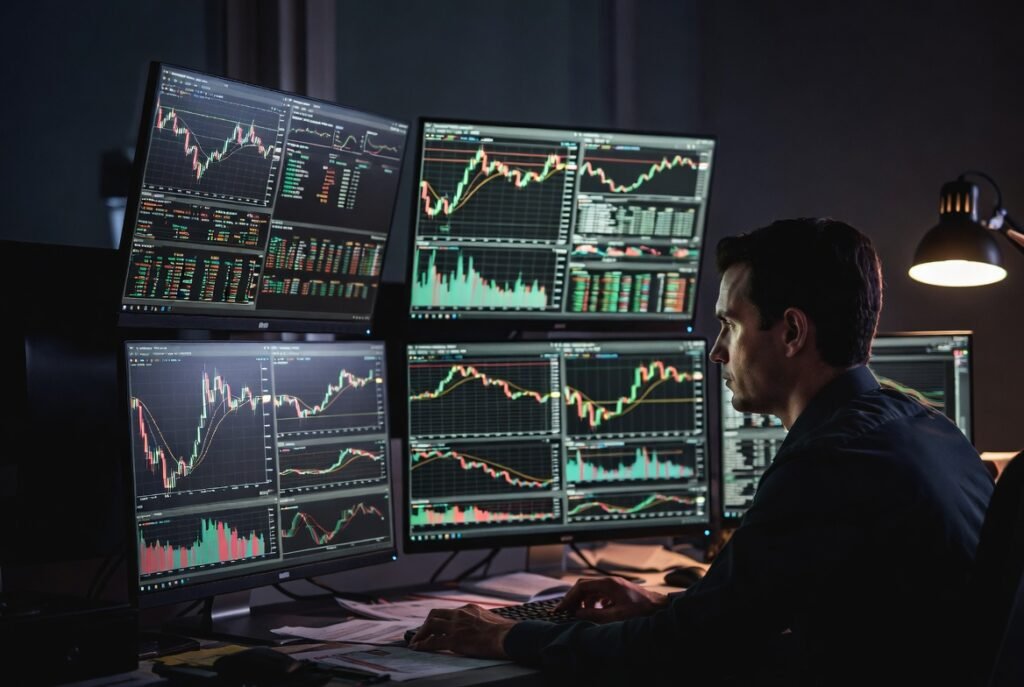
Hedging is now a popular instrument to deal with volatility. Options, futures and inverse funds are some of the tools that are employed to hedge portfolios against downside risk. Hedging can prevent the possible profit but it gives security in a sudden fall of the market.
Greater Emphasis on Financial Objectives

Volatility has turned to goal-based investing. Investors currently make plans according to particular goals, including retirement, education or wealth conservation. This will be used to ensure there is transparency and control in the unpredictable markets.
